No single playful format suits every retailer; the right approach depends on the product, customer, and setting.
Curiosity can help shoppers notice options, try a product, or find a better solution, without turning the visit into a performance. The right invitation can be quiet and practical, and customers should remain free to decline.
What can a playful retail experience look like in different stores?
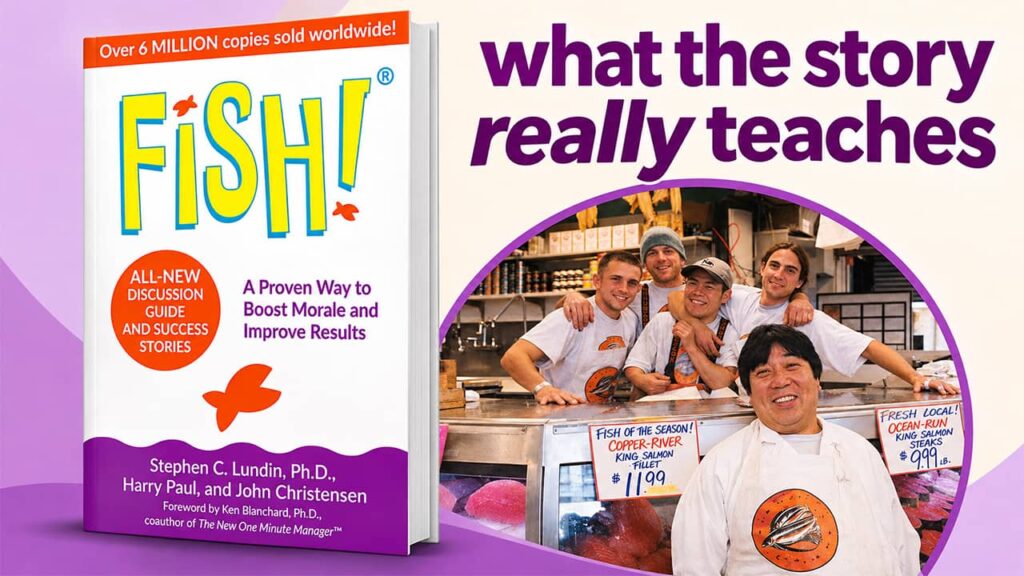
In your store, Play can mean inviting customers to explore, compare, or solve a small problem; the FISH! Philosophy treats it as a way of working, not a separate entertainment. A toy shop might offer a hands-on building table, while a grocery store could make discovery useful with clearly labeled samples or a simple way to compare ingredients. In a high-end clothing shop, staff might suggest trying an unexpected combination; in a pharmacy, a calm, optional demonstration may be more fitting than jokes or games.
How can you tell whether the approach fits your customers?
Choose an idea that helps people shop or helps staff solve a service problem, then test it on a small scale and learn from the response. Keep safety, access, privacy, product handling, and store flow in view; never make a customer participate or make staff feel they must perform a personality.
Before you proceed, check:
- Does this suit what we’re selling and why the customer came in?
- Can people opt out without awkwardness?
- Is the boundary clear—no pressure, exclusion, embarrassment, or disruption?
If the answers are sound, play can add useful energy without distracting from the reason people came.
Questions like this one, and many more about service culture, are explored in the FISH! Philosophy upgraded trial, which gives your team 30 days of access to the FISH! film and its digital guides.