
Restaurant employee turnover is a problem many quick service restaurants know well. The work can be demanding, the pace is fast, and crew members may leave when the job feels like a dead end or when the manager on duty makes each shift harder than it needs to be. A Subway district in the Kansas City, Missouri area reported results that connected manager training with lower turnover, stronger sales, and a much higher district ranking.
What did the Subway district report after training its young managers?
The district, run by Area Director Jeff Frahm for Subway (DAI), focused its training on empowering young managers to lead.
Frahm said, “They have never seen training like this and they are thrilled that the company values them enough to invite them to it.”
The district reported three results:
- A 7% increase in comparable sales over the previous year
- Turnover reduced from 400% to 150%
- A ranking of 2nd out of 25, up from 23rd
A turnover figure above 100% means the district replaced its staff several times over in a year. These were the reported results of one district, not a company-wide Subway result.
This Kansas City-area Subway district is one of many organizations whose results with the FISH! Philosophy have been documented. Its story is especially useful because it points to a question that reaches far beyond one brand: what happens when a restaurant invests in the people who lead the crew each day?
Why is restaurant employee turnover so high?
Restaurant employee turnover is high for several reasons that often overlap. Quick service restaurant work can involve busy rushes, customer pressure, repetitive tasks, changing schedules, and physical demands, while many crew members balance school, family responsibilities, or another job. When the schedule is hard to manage or the pay and benefits do not match the demands, leaving can seem like the simplest choice.
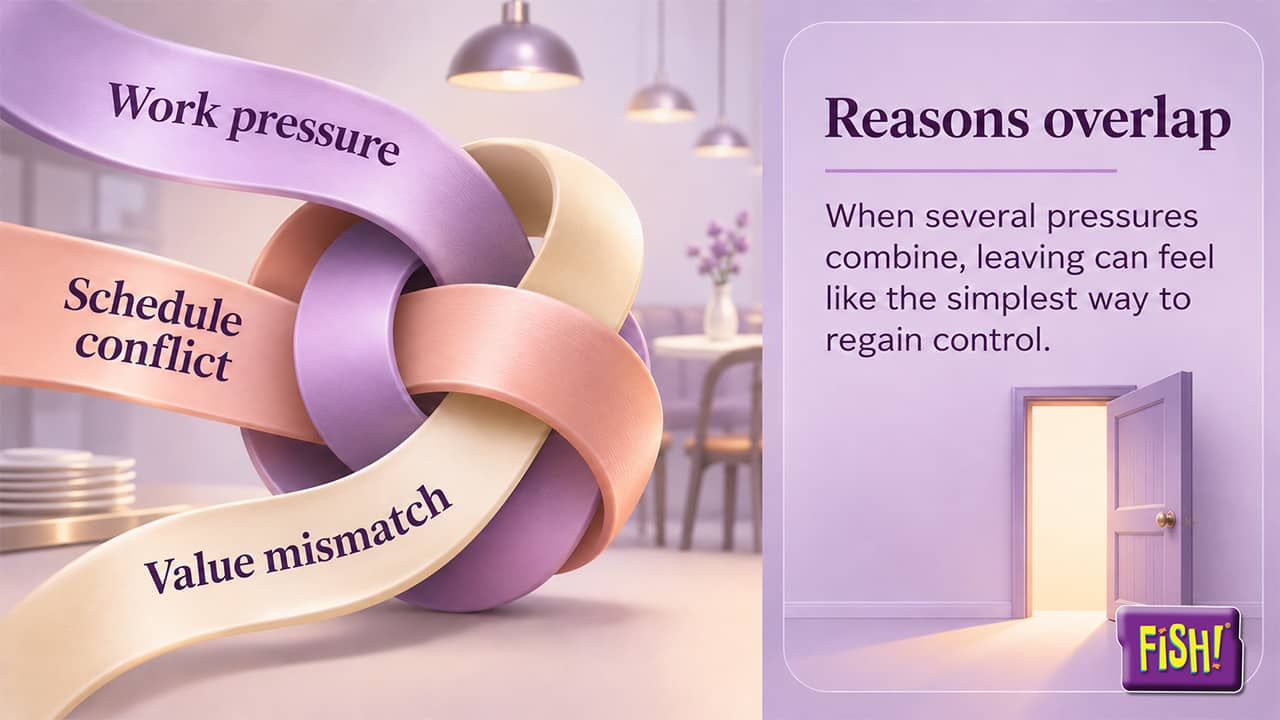
Restaurant employee turnover rarely has one cause, because work pressure, hard-to-manage schedules, and pay that doesn’t match the demands often combine until leaving seems like the simplest choice.
The daily relationship with a manager matters just as much. Respect, support, and chances to learn can make a difficult shift feel worthwhile. Embarrassing mistakes, unnoticed effort, and unclear paths forward can send that same crew member looking elsewhere.
Restaurant turnover affects the whole operation. Each departure can bring new recruiting, onboarding, training, scheduling, and supervision work, while experienced workers cover gaps as a new employee learns the basics. Service can suffer, and the remaining crew may feel that they are carrying too much.
Training wages are only one part of the cost. The restaurant also loses time and energy that could have gone to customers and the team.
How do young managers shape restaurant staff retention?
Shift managers and young managers turn company values into daily experience. They decide how a new crew member is coached, how a busy period is handled, and whether a problem becomes a learning moment or a reason to feel defeated. Even when they do not control pay, benefits, or staffing levels, they have a strong effect on whether people feel safe, capable, and valued.
Manager training supports retention as well as promotion. A new manager may know how to complete operational tasks but still need help with listening, feedback, conflict, recognition, and leading under pressure. Those skills offer more choices than simply pushing harder or correcting people more often.
The managers were thrilled that the company valued them enough to invite them. Being selected for development can tell a young leader that the organization sees potential in them, and it can strengthen their reason to take responsibility for the crew’s experience.
How can the FISH! Philosophy help a restaurant reduce turnover?
The FISH! Philosophy gives managers a shared language for the human side of work. Its practices are Choose Your Attitude, Be There, Make Their Day, and Play. They work alongside fair pay, workable staffing, and safe conditions rather than replacing them, while helping leaders put respect and engagement into everyday actions.
Choose Your Attitude in a busy restaurant
Choose Your Attitude begins with noticing what a person is bringing into a situation and deciding how to show up. Managers can recognize stress, reset after a difficult interaction, and choose a response that helps the crew move forward without ignoring real problems or blaming an employee for having feelings.
A manager can model this without acting cheerful every minute. They can name that a shift is difficult while still choosing to be steady, fair, and helpful. That example gives crew members a way to handle setbacks without spreading frustration through the whole team.
Be There for crew members
Be There means complete presence: physical, mental, and emotional. In a restaurant, that can be as basic as looking up from a task when a crew member speaks, listening before forming a reply, and making sure the person’s concern was understood. A manager can finish an urgent task and then give a conversation full attention when the moment calls for it.
Presence helps managers notice more than performance numbers. They may see that a new hire is unsure, that an experienced crew member is carrying extra work, or that a team member has stopped speaking up. Those observations create a chance to offer support before frustration turns into an absence or a resignation.
Make Their Day through genuine recognition
Make Their Day turns recognition into a sign that people’s effort, choices, and presence matter. Recognition works best when it is sincere, specific, and suited to the person receiving it. One crew member may appreciate a public thank-you; another may prefer a quiet word after the shift.
Restaurant leaders can recognize the behaviors that keep a team working: helping a new coworker, staying calm with a frustrated customer, keeping a station ready for the next shift, or finding a better way to solve a problem. The point is to name what the person did and why it helped.
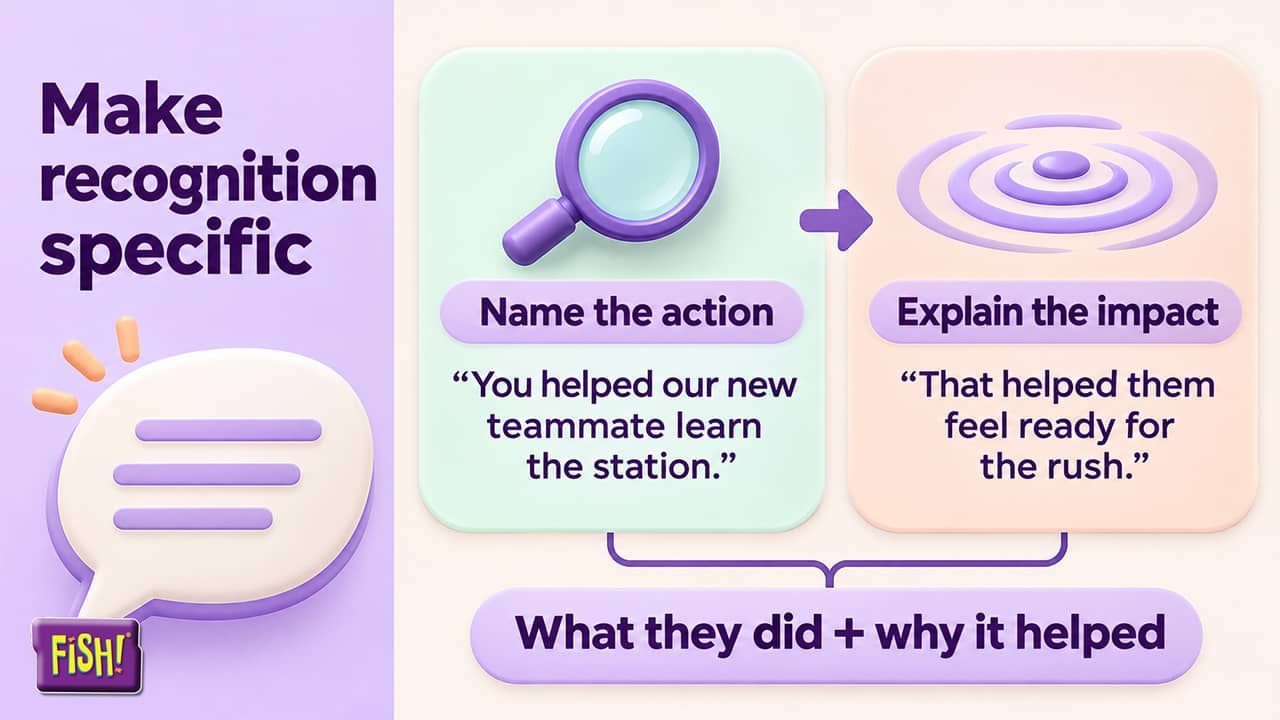
Make Their Day works best when recognition names what the person did and why it helped, so the crew member knows which effort mattered.
Use Play to support learning and problem solving
In the FISH! Philosophy, Play is a mindset of curiosity, energy, and creativity, not a demand for constant entertainment. It means bringing a willingness to try a better way while treating people with respect.
For a restaurant manager, Play might mean inviting a crew member to suggest a small improvement to a handoff, a training explanation, or the way a recurring problem is handled. Clear boundaries for safety, service, and conduct still matter, while people need room to test, learn, and adjust within them.
This matters for retention because fear shuts down initiative. Blame or ridicule teaches employees to do only what they are told, while a curious response can turn an unsuccessful attempt into a useful lesson. Play should include different personalities: one person may show it through humor, another through careful problem solving.
What else supports fast food employee turnover reduction?
Manager behavior is powerful, but it cannot carry the whole burden. A restaurant that wants better staff retention should also review scheduling, pay and benefits, onboarding, training time, and career paths. Students and parents may need flexibility, while anyone planning life outside work may value predictability, so leaders should learn what their employees need.
The first weeks deserve special attention. A clear welcome, realistic job expectations, useful practice, and a named person to ask for help can prevent avoidable frustration. From there, a restaurant can show what growth looks like: learning another station, becoming a trainer, moving toward shift manager, or developing skills that transfer to a future role.
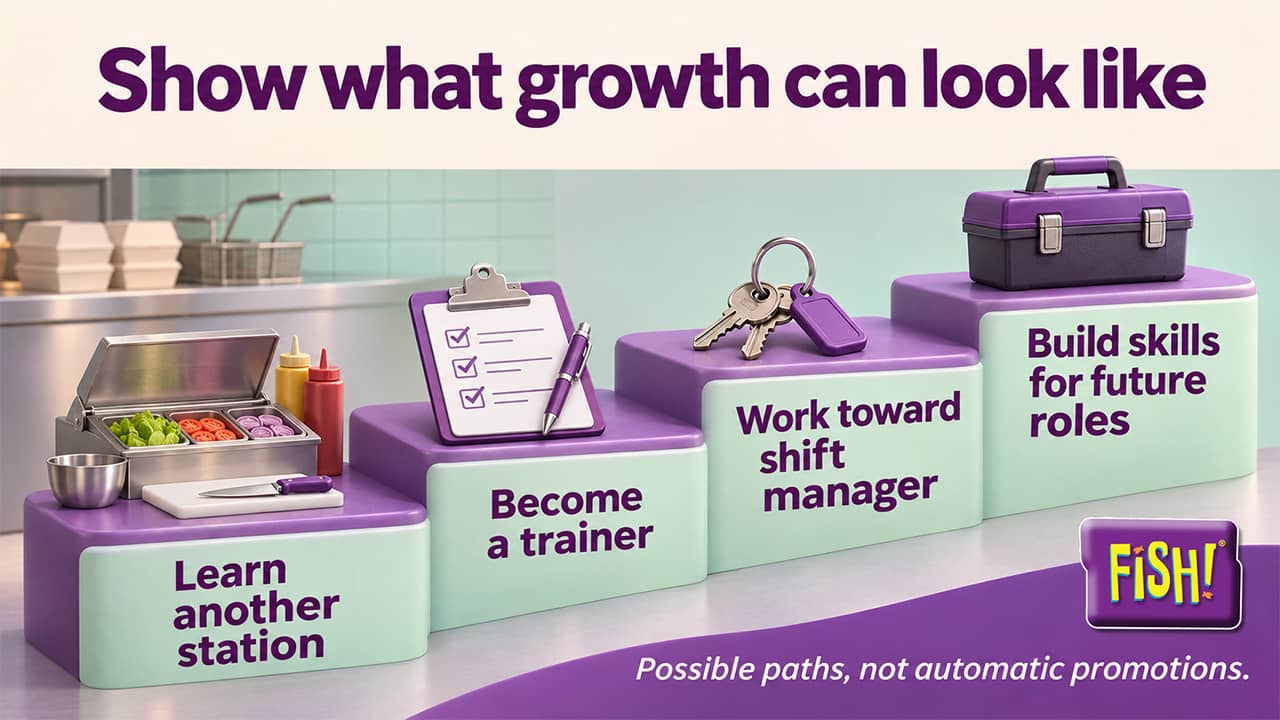
A restaurant can show crew members what growth looks like, from learning another station to working toward shift manager, while being clear that these are possible paths rather than automatic promotions.
Together, the FISH! practices give managers practical ways to support that process. Be There helps them learn what a new hire needs, Make Their Day helps them notice progress, Choose Your Attitude supports fair coaching, and Play leaves room for questions and learning.
Leaders should also track more than the final turnover number. Early departures, attendance patterns, internal promotions, employee feedback, and exit reasons can show whether the problem is concentrated in one shift, one manager, one scheduling pattern, or one stage of onboarding.
What can restaurant leaders try this week?
Start with the young managers and shift managers who shape the crew’s daily experience. Ask each one what support would help them lead better, then choose one small practice to repeat: a focused check-in, a specific thank-you, a short learning review after a mistake, or a question about what would make the next shift work better.
Keep the goal human and practical: create a workplace where managers feel valued enough to grow and crew members have more reasons to stay.
Retention starts with the people who lead the shift
Restaurant employee turnover rarely has one cause, so it rarely has one fix. The Kansas City-area Subway district’s reported experience points to a place many restaurants can begin: invest in young managers and show them that their leadership matters. When managers are trained, supported, present, and able to recognize the people around them, the whole crew gets a better chance to learn, contribute, and stay.
Try the FISH! Philosophy with your team
If your restaurant is working on manager training, crew engagement, or staff retention, try the FISH! Philosophy upgraded trial. It gives your team 30 days of access to the FISH! film and its digital guides, so you can explore Choose Your Attitude, Be There, Make Their Day, and Play together and start putting these ideas into practice.

Frequently Asked Questions
How can a restaurant build a stronger path from crew member to manager?
Show employees what skills and responsibilities lead to the next role, then give them chances to practice those skills with support. Clear growth paths can make restaurant work feel more like a developing career than a series of disconnected shifts.
What should a new shift manager learn first?
Along with restaurant procedures, a new shift manager should learn how to listen, coach, give clear feedback, handle conflict, and support people during pressure. Those skills help turn operational knowledge into leadership that crew members can trust.
How can a restaurant make scheduling more supportive?
Ask employees what predictability and flexibility mean for their lives, then look for ways to publish schedules clearly and handle reasonable changes consistently. Scheduling improvements work best when leaders also review staffing levels so flexibility does not simply shift more pressure onto the remaining crew.
What should a restaurant do when an employee makes a serious mistake?
Address safety, conduct, or customer impact clearly, then ask what happened and what can be learned. A fair response holds people accountable while helping the team improve, which is more useful than creating fear around every error.