Employee buy-in can decide whether a culture change becomes part of daily work or fades after the launch meeting. Republic Bank and Trust offers a useful example because its FISH! effort connected leadership support, employee choice, shared language, and simple moments of recognition across a large, spread-out organization.
How did Republic Bank and Trust get employee buy-in for a culture change?
Robert Hussey, a trainer at Republic Bank and Trust, had followed The FISH! Philosophy since the original FISH! film was released. When he was hired at the bank last year, one thing he negotiated was bringing The FISH! Philosophy to the bank’s culture.
“I instantly connected with FISH! when I saw the film. I saw the benefits it could have in motivating employees, allowing them to enjoy their work, and how it could help with retention and productivity,” Hussey says. “When I introduced it to my former employer in 1998, it took off like gangbusters.”
Hussey did not begin by asking the whole organization to change. First, his direct supervisor assured him that she supported bringing The FISH! Philosophy to the bank. With that support, he put together a PowerPoint presentation for the CEO.
“I knew that FISH! would not work unless you got buy-in from leadership, and could then tell the employees ‘you’ve been invited to embrace this and run with it.’”
The bank had 800 employees in 45 branches in four states. Before Hussey arrived, some departments had already implemented their own variations of The FISH! Philosophy. Bringing it to the entire organization “made the environment consistent across the board,” Hussey says, and “gave us a common language.”
The activities were practical and varied. Sales referral goals were attached to a contest. The winner got a freshly-cooked breakfast by their manager as a reward, or got to have their car washed by their manager. One manager even offered shoe shines to contest winners. The bank also used a Hawaiian day and a Barbecue day to help get the energy up and get employees excited. One department held a Chili-Cook Off that raised money for Breast Cancer Awareness.
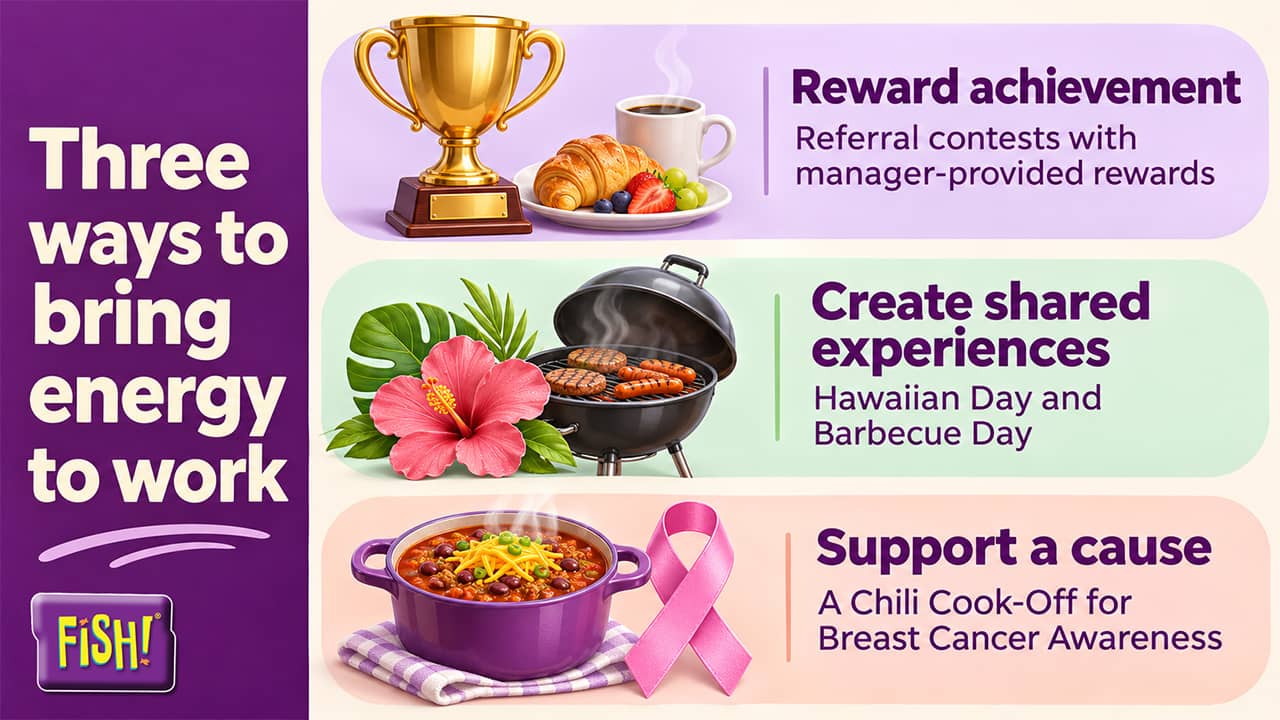
The bank’s activities ranged from manager-served contest rewards to themed days and a cook-off that raised money for a cause.
The results were immediate, the bank reported. One department doubled their sales goals soon after implementing FISH! The bank said, “We have been very pleased with how successful The FISH! Philosophy has been for us. The organization was looking to keep energy going in a time when banks everywhere are struggling. This has been an excellent means to that end.”
Republic Bank and Trust is one of many organizations whose results with The FISH! Philosophy have been documented. Its story stands out here for the way it links a culture idea to a clear leadership conversation, a shared language, and activities employees could take part in.
Why does leadership support have to come before employee buy-in?
People watch what leaders do before they trust what leaders say. If a company asks employees to embrace a new culture while managers ignore it, employees have a good reason to treat the effort as a slogan. Leadership buy-in gives the change permission to become real; it cannot force people to care.
Hussey’s sequence is worth studying. He secured support from his direct supervisor, prepared a presentation for the CEO, and described employees as invited to embrace the idea and run with it. The invitation signals ownership while asking employees to give the idea meaning in their own work.
Leaders need to model the attitude, attention, recognition, and curiosity they hope to see. In FISH! terms, Choose Your Attitude means recognizing that people can set the direction they bring to a situation, including after a setback. The practice leaves room to acknowledge hard problems while choosing how to face them.
Be There adds another test: Are leaders present with the people responsible for the results? Complete presence includes physical, mental, and emotional attention. A manager who listens, notices what a team is experiencing, and follows up gives employees evidence that the culture is about people as well as performance.
How to get employee buy-in without making culture change feel forced
Buy-in grows when people understand the change, see why it matters, and have a real way to take part. Compliance may follow a mandate, but ownership grows from involvement. An invitation works better when it is backed by clear purpose, practical examples, and follow-up.
Give employees a clear picture of the idea and its purpose. Explain what the organization is trying to improve, what employees will be asked to try, and what will stay the same.
Then ask where the idea fits their work. Involving people in the details turns an abstract value into behavior they can recognize.
The FISH! practices support that process because they invite people to notice and choose. Choose Your Attitude helps someone decide how to show up, while Be There brings full physical, mental, and emotional attention to the person or situation in front of them.
From there, Make Their Day turns attention into a sincere action that leaves another person better off. Play adds curiosity, energy, and creativity, giving employees another way to bring the shared idea into daily work.
Managers can make participation easier by offering small experiments. Invite a team to try one recognition habit, one new way to listen, or one creative approach to a customer problem.
Let the team discuss what worked and what should change. When employees help shape the next version, buy-in keeps growing through conversation and follow-up.
What did Republic Bank and Trust do to bring 45 branches together?
The bank brought The FISH! Philosophy to the entire organization, creating a common language and making the environment consistent across the board. That approach matters in any organization spread across locations.
A common language gives employees a short way to describe the behavior they want. Words such as Be There, Make Their Day, Choose Your Attitude, and Play can travel between branches and departments, helping people discuss culture without starting from scratch.
The bank’s reported activities included a sales referral contest, manager-cooked breakfasts, car washes, shoe shines, Hawaiian day, Barbecue day, and a Chili-Cook Off that raised money for Breast Cancer Awareness. These activities accompanied the shared approach across the organization.
For a multi-location organization, begin with a small set of shared practices and define what they look like in everyday work. Give local teams room to adapt them while keeping the language, purpose, and basic expectations consistent. Share examples across locations, and use follow-up conversations, manager example, and recognition to keep the culture alive.
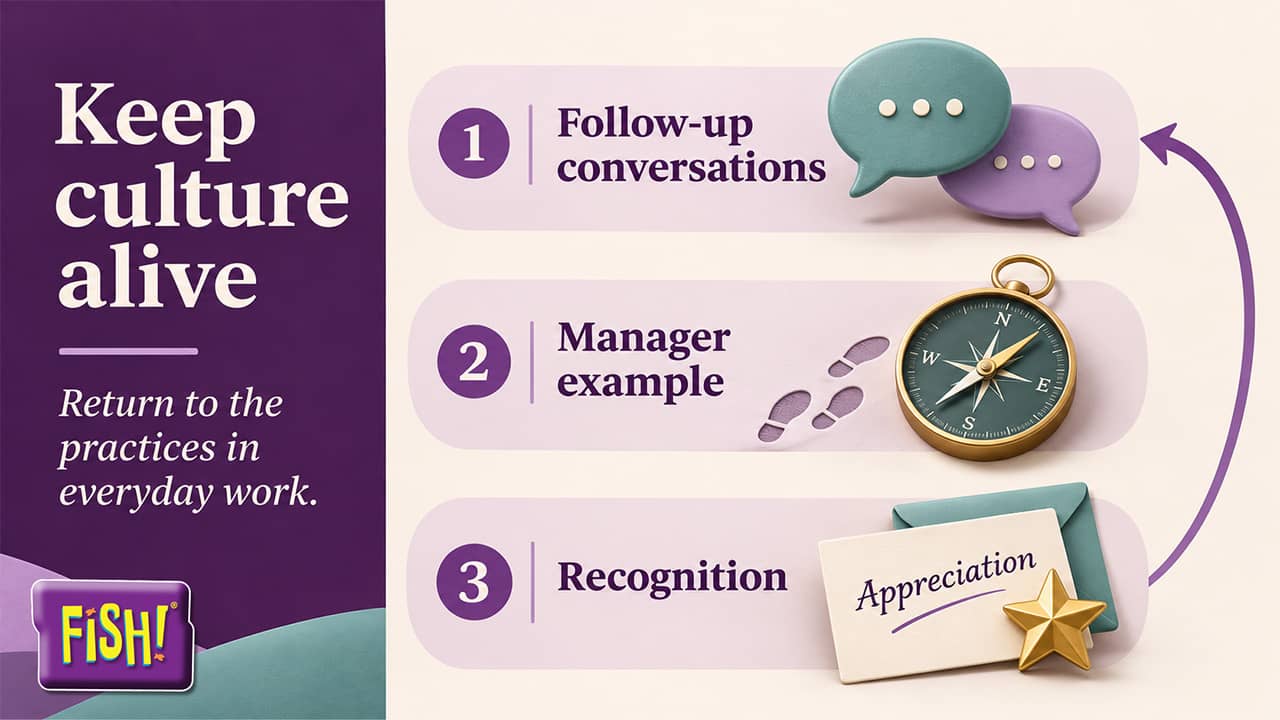
A shared culture stays alive when people keep returning to the practices in everyday work.
How can recognition contests improve employee engagement?
A recognition contest works best when the reward shows that leaders noticed the effort and are willing to participate in the team’s success. It can create focus, but the human meaning comes from how the recognition is delivered.
The bank’s reported rewards included a manager cooking breakfast, washing a winner’s car, or offering a shoe shine. In general, a manager who serves a contest winner can make recognition feel personal and show a willingness to participate in the team’s success.
Make Their Day centers on moments that show people their efforts, choices, and presence matter. Recognition works best when it is genuine and appropriate to the person receiving it.
Some employees enjoy public attention; others would rather receive a private thank-you. Specific recognition is stronger than a vague compliment because it names what the person did and why it helped.
Use contests carefully. Set a clear goal, make the rules easy to understand, and recognize contributions that support the wider culture.
Watch for unintended effects, such as employees competing in ways that damage trust or quieter contributors disappearing from view. Pair results with behavior by noticing service, teamwork, learning, and helpful ideas as well as sales numbers.
How can teams keep energy up during a hard time?
Energy is easier to sustain when people have meaningful work, supportive relationships, and room for creativity. A themed day can create a lift, but it cannot carry a culture by itself.
The bank’s Hawaiian day, Barbecue day, and Chili-Cook Off gave employees ways to take part. Play helps explain why activities like these can work: it brings curiosity, energy, and creativity into the workday. That mindset can help people try a new approach, solve a problem, or make a routine day feel more human.
Leaders should also make the playing field clear. Employees need to know the values and boundaries that guide the work, along with the freedom they have inside those boundaries. When people can experiment without being embarrassed for every imperfect attempt, they are more likely to offer ideas.
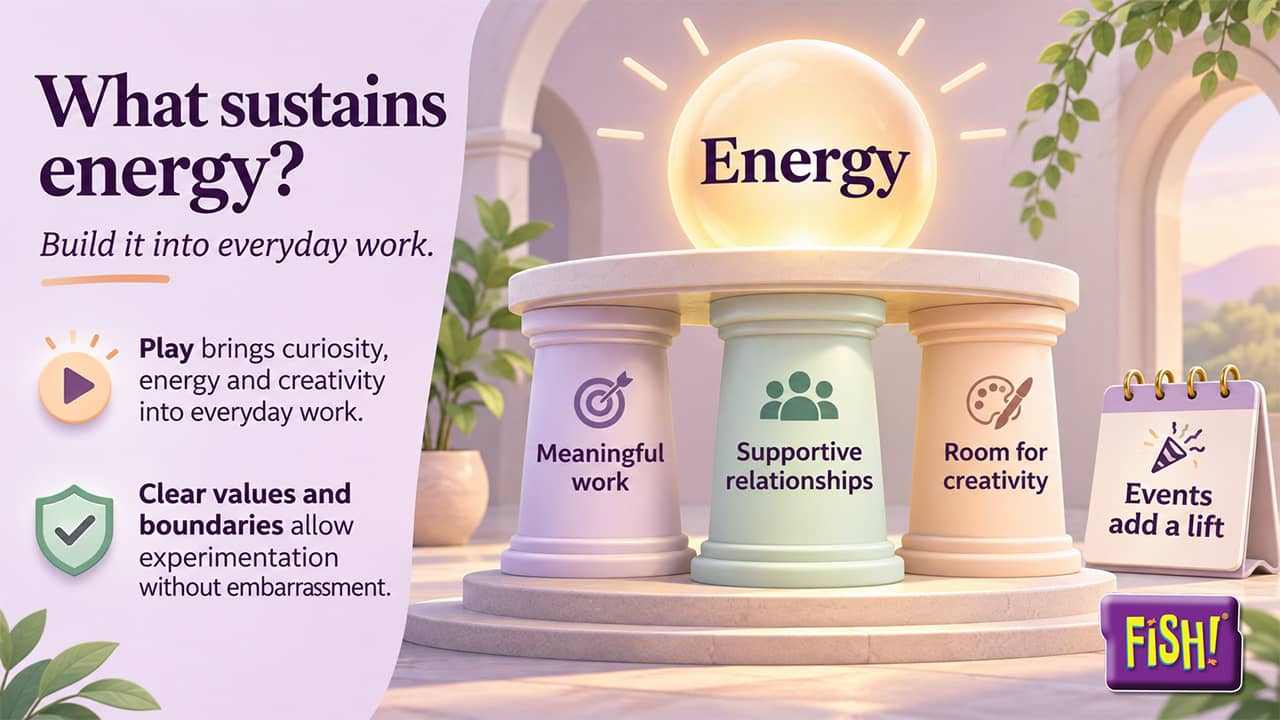
A themed day can lift a team, but lasting energy comes from meaningful work, good relationships, and room to be creative.
Choose Your Attitude keeps the effort grounded. Employees can acknowledge that a period is difficult and still choose how they want to show up.
Be There makes room for people who are struggling, while Make Their Day directs attention toward actions that support coworkers and customers. Together, the practices build energy through connection and purpose rather than pressure to perform happiness.
What can another workplace try first?
Start with leadership by agreeing on the culture you want to build and identifying the behaviors leaders will model. Next, invite employees into a conversation about what the idea should look like in their work.
Give the team a common language, one small experiment, and a way to share what it learns. Keep recognition sincere, make room for different personalities, and connect Play to better service and problem-solving.
When the work is spread across locations, hold on to the shared purpose while letting each team create its own examples. That balance can help employee buy-in grow without turning culture into a script.
A practical next step for your team
Republic Bank and Trust’s case shows that culture change can begin with one person’s idea, but it grows through leadership support, employee invitation, shared language, and repeated action. If you want to strengthen buy-in, start small: choose one practice, invite your team to try it, and ask what would make it useful in the work they do every day.
Try the FISH! Philosophy with your team
Try the FISH! Philosophy upgraded trial with your team. It gives your team 30 days of access to the FISH! film and its digital guides, so you can explore the practices together and start putting the ideas behind employee buy-in into practice.

Frequently Asked Questions
What should managers do when employees resist a culture change?
Start by listening for the concern beneath the resistance. Employees may need more information, a clearer connection to their work, or proof that leaders will act consistently; responding with presence and curiosity is more useful than labeling people as negative.
Can culture change work in a remote or hybrid team?
Yes, but the practices must be made visible in the team’s normal tools and routines. Teams can define what being present looks like in meetings, recognize contributions in ways that fit each person, and leave room for creative problem-solving without requiring everyone to show enthusiasm in the same way.
How can a company measure whether employee buy-in is improving?
Use more than one signal, such as participation, employee feedback, follow-through on agreed actions, retention patterns, and business measures connected to the change. Numbers can show movement, while regular conversations help explain why the movement is happening.
How do you keep a culture program from becoming a short-lived campaign?
Build the practices into manager behavior, onboarding, team conversations, recognition, and follow-up rather than treating them as a one-time event. The language stays useful when people use it to discuss real work, real challenges, and the choices they are making together.