
New manager tips often focus on delegation, clear communication, and one-on-one meetings. Jason Robinson’s story points to a deeper question: What attitude is a manager bringing into the workplace each day? Robinson, a manager with Sodexo, a global food service company, found that his stress and authoritative style were part of a team problem that included low morale and high turnover.
What happened when Jason Robinson became a new manager?
Robinson was a brand new manager given a new account. He was working 16-hour days, hating his job, and bringing his stress home with him. “Morale was low, turnover was high. I was a brand new manager given a new account, and being new, it was hard for me.”
His authoritative management style was not working well for him, and he could not figure out what he was doing wrong. Then he was introduced to the FISH! Philosophy, including Choose Your Attitude, and his approach began to change.
The change was not instant, and it was not easy. Gradually, over time, things began to take shape. Robinson said, “When I began to choose my attitude and I learned to enjoy work rather than dread it, I saw a transformation begin to happen both at work and at home. It was a good feeling when being home finally meant I could really be at home instead of carrying baggage home from work.”
He applied the FISH! Philosophy with his staff. Robinson reported that turnover had been high, which he said was something one could expect in the food service industry. “After introducing FISH!, we had 95 percent retention in the first year! Employee morale went up and attitudes changed for the better.”
He also began sending Monday morning FISH! emails with inspirational stories and ideas to his staff members. “These help start each week off in a positive way and it reminds people that FISH! is alive and working well in our workplace.”
Robinson later did training on the FISH! Philosophy for Sodexo and put together several different programs built around the original FISH! film. Of the four practices, Choose Your Attitude stood out most to him. “This one’s a big one for me.” He explained, “It is about a lot of self-realization that you have to do on a day-to-day basis, it’s about being aware of the choice you have and then owning the choice you make.”
Robinson’s Sodexo team is one of many organizations whose results with the FISH! Philosophy have been documented. His experience shows how a manager’s inner shift can become part of a wider change in the team’s daily experience.
What should a new manager do when a team is struggling and turnover is high?
Start by looking at the whole system, including your own behavior. A first-time manager may assume that a struggling team needs firmer rules or closer control, and clear expectations and accountability do matter. Yet if people feel watched, dismissed, or blamed, more control can make them less willing to speak up, solve problems, or stay.
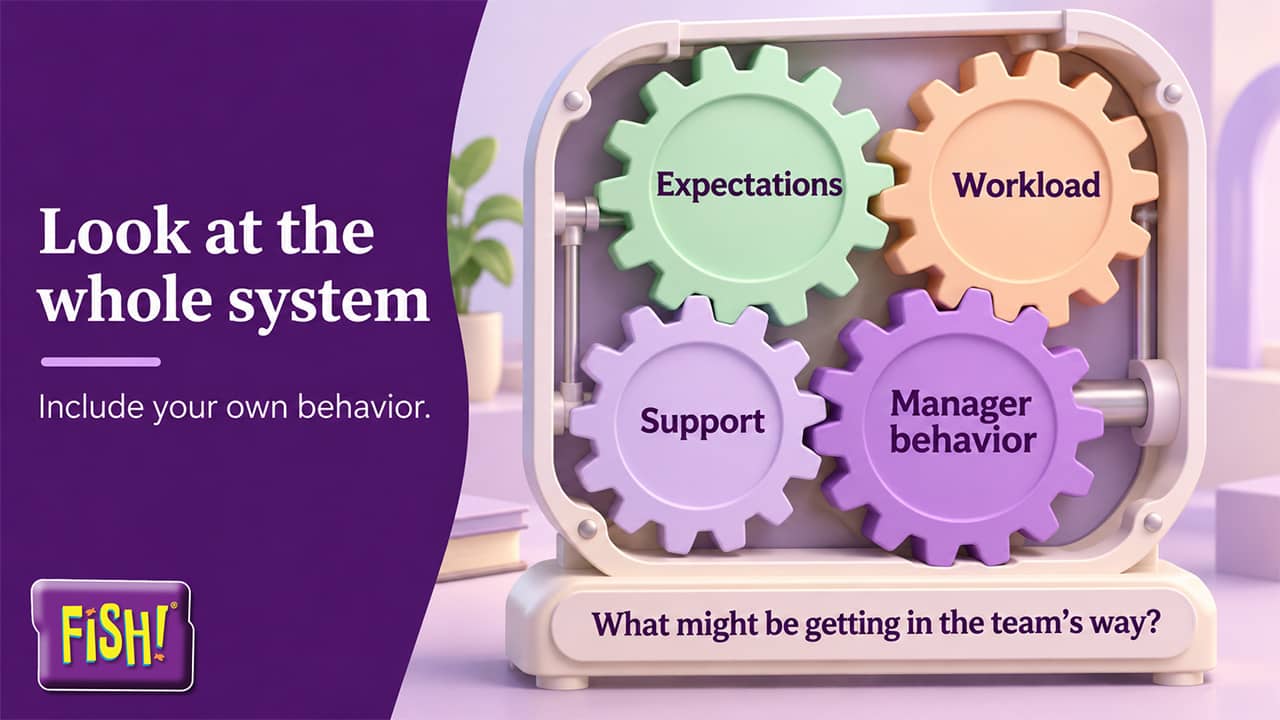
When a team is struggling, a new manager’s own behavior belongs in the picture alongside workload, expectations, and support.
Listening should come before changing everything. Make time to understand what employees are seeing, where work gets difficult, and what makes them consider leaving. Be There, one of the FISH! practices, means complete presence: physical, mental, and emotional, so a manager focuses on the person and the conversation instead of preparing a reply or treating a concern as an interruption.
A manager also needs to move from doing everything personally to leading the team: delegate meaningful work, avoid micromanagement, and give people room to make decisions within clear boundaries. Play supports this approach by treating curiosity, trial and error, and creative problem-solving as useful parts of work. Clear standards still matter, while employees need enough safety to suggest a better way to serve customers or handle a problem.
Why do authoritative management styles often backfire?
An authoritative style can feel efficient because the manager gives orders and expects compliance. Trouble begins when authority replaces communication: employees may follow instructions while hiding problems, withholding ideas, or doing only what they think will avoid criticism. The manager receives less honest information and may respond with even more control.
This pattern is especially risky for frontline managers in food service and hospitality management. The work changes quickly, employees often need to make practical decisions, and the customer experience depends on how people respond in the moment. A manager who controls every method can slow the team down and teach employees that judgment is dangerous.
Be There helps a manager understand what is happening before reacting. Choose Your Attitude then asks the leader to own the mood they bring into the room. Make Their Day turns attention into genuine recognition, while Play gives employees room for energy and creativity within clear boundaries.
A simple self-check can help: When someone raises a concern or offers an idea, is my first response curiosity or judgment? Accountability is stronger when people understand the goal, receive useful feedback, and believe the manager is trying to help them succeed.
How can managers reduce burnout and leave work stress at work?
Burnout grows when stress narrows a manager’s choices. Long hours can make every problem feel like a reason to work longer and listen less, increasing the team’s strain. Awareness is a better starting point than pretending difficult work is easy.
Choose Your Attitude begins with awareness rather than forced cheerfulness. A manager notices the mood they are in, recognizes the situation they are entering, and decides how they want to approach it. The choice may need to be made again after a difficult conversation, a setback, or a change of plans.
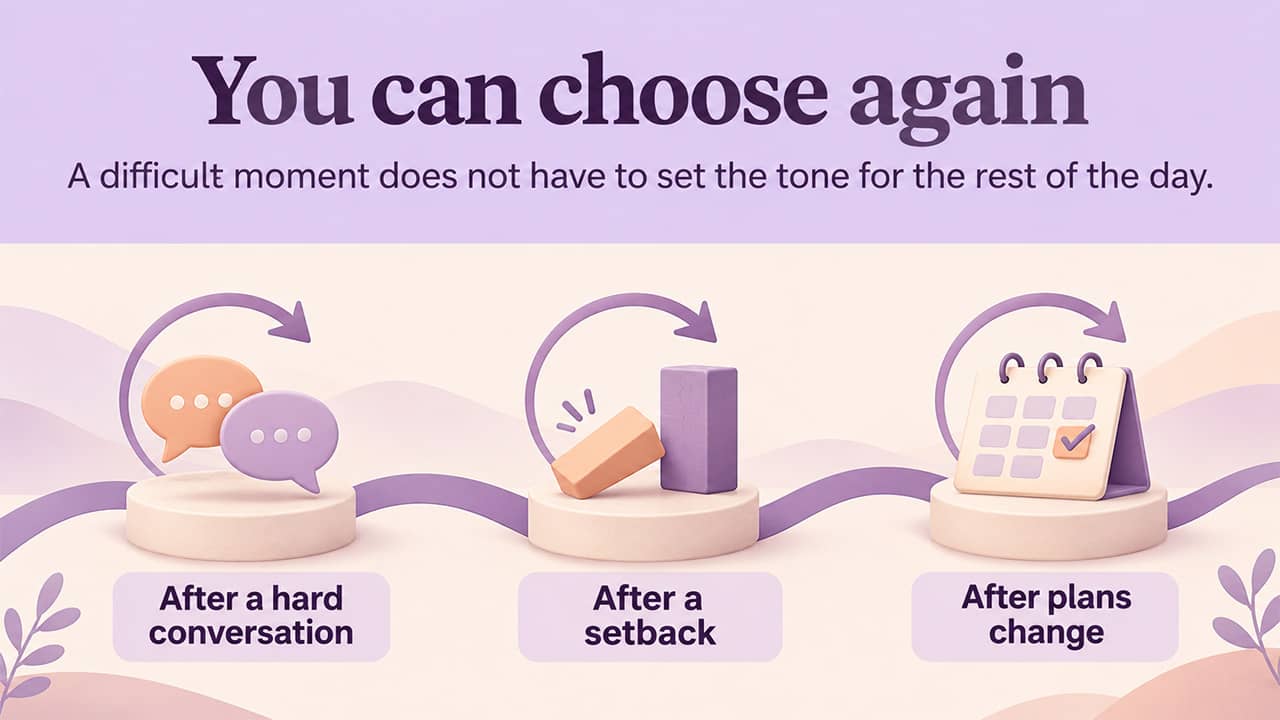
A difficult moment does not have to set the tone for the rest of the day.
Try asking, “Who are you being while you’re doing what you’re doing?” Before a shift, a manager might name the attitude they want to bring. After a tense interaction, a pause can help reset the next conversation, making room for frustration without letting it become the team’s only atmosphere.
Robinson’s story gives this idea a clear shape. He reported that choosing his attitude and learning to enjoy work rather than dread it changed his experience at work and at home. A healthier work-life balance can come from being more present during work and less consumed by it afterward.
How can a manager build morale without making recognition feel forced?
Morale grows through repeated signals that people are seen, heard, and valued. Make Their Day provides a useful lens: a specific thank-you, sincere acknowledgment, or small gesture that leaves a coworker better off. Recognition feels false when it is generic or forced.
A manager can begin by noticing the work that is easy to overlook: who helped a teammate, handled a difficult customer with care, or found a better way to complete a task? Specific recognition tells employees that their choices and effort have an effect. Private praise may work best for someone who dislikes public attention.
Be There makes recognition more accurate because a distracted manager may notice only visible results. Play can support morale through warmth, curiosity, and different forms of energy. One employee may show it through humor, while another tries a new method or asks an unusual question.
Why do small weekly rituals help a team stay connected?
Team culture grows through repeated conversations. A Monday message, short reflection, or regular story can give people a shared starting point for the week and keep the team’s values visible when work becomes busy.
Robinson’s Monday morning FISH! emails included inspirational stories and ideas for his staff. He said they helped start each week positively and reminded people that FISH! was alive and working well in the workplace. For your own team, choose a simple, repeatable way to connect daily work with the kind of workplace you want to create.

A simple weekly ritual keeps a team’s values visible when work gets busy.
A short weekly note might invite employees to reflect on a customer interaction, recognize a teammate, or share a small improvement. Keep it easy to maintain and open enough that it does not feel like another performance task. Communication works best when it goes both ways, so ask what the team is noticing.
What changed for Jason Robinson after he started choosing his attitude?
Robinson reported changes at work and at home. After introducing FISH! with his staff, he said morale went up and attitudes changed for the better, and he reported 95 percent retention in the first year. He then began sending Monday morning emails with stories and ideas, later training others on the FISH! Philosophy for Sodexo and building programs around the FISH! film.
The larger lesson is that change can be gradual. Robinson specifically said it was not instant and was not easy. For a first-time manager trying to improve employee retention, that means listening first, admitting what you do not know, making one behavior more intentional, and watching what the team tells you over time.
New manager tips to try this week
Choose one moment before work to decide how you want to show up, then practice Be There during one conversation by giving the person your full physical, mental, and emotional attention. Notice one contribution and recognize it sincerely. Then ask where the team needs more room to solve a problem while keeping the goal and boundaries clear.
A manager’s attitude is contagious, but so are presence, recognition, and trust.
Try the FISH! Philosophy with your team
If your team is working through low morale, stress, or turnover, the FISH! Philosophy can give you a shared language for the culture you want to build. The FISH! Philosophy upgraded trial gives a team 30 days of access to the FISH! film and its digital guides, so you can start putting these ideas into practice and explore how they fit your workplace.

Frequently Asked Questions
How can a new manager give feedback without sounding controlling?
Describe the behavior, explain its impact, and invite the employee’s view before deciding on the next step. Be There supports full listening, while Choose Your Attitude keeps the conversation centered on improvement.
How should a manager respond when an employee makes a mistake?
Start with curiosity about what happened and what the employee learned, then decide what support or correction is needed. This response protects accountability while making it safer for people to raise problems early.
How can a manager support employees who do not enjoy workplace activities?
Visible enthusiasm is only one form of engagement. Play can look like creative problem-solving or trying a new approach, while Make Their Day can take the form of sincere, individualized recognition.
How often should a manager meet one-on-one with employees?
The right rhythm depends on the team, the work, and each employee’s needs. The important part is that conversations are consistent enough for people to raise concerns before they become larger problems, and that the manager is genuinely present when they happen.
Can the FISH! practices replace formal management training?
They work best as a practical culture and leadership lens alongside sound training, policies, and job-specific skills. The practices can shape how a manager listens, communicates, recognizes people, and responds to setbacks, but they do not remove the need for clear expectations and fair accountability.