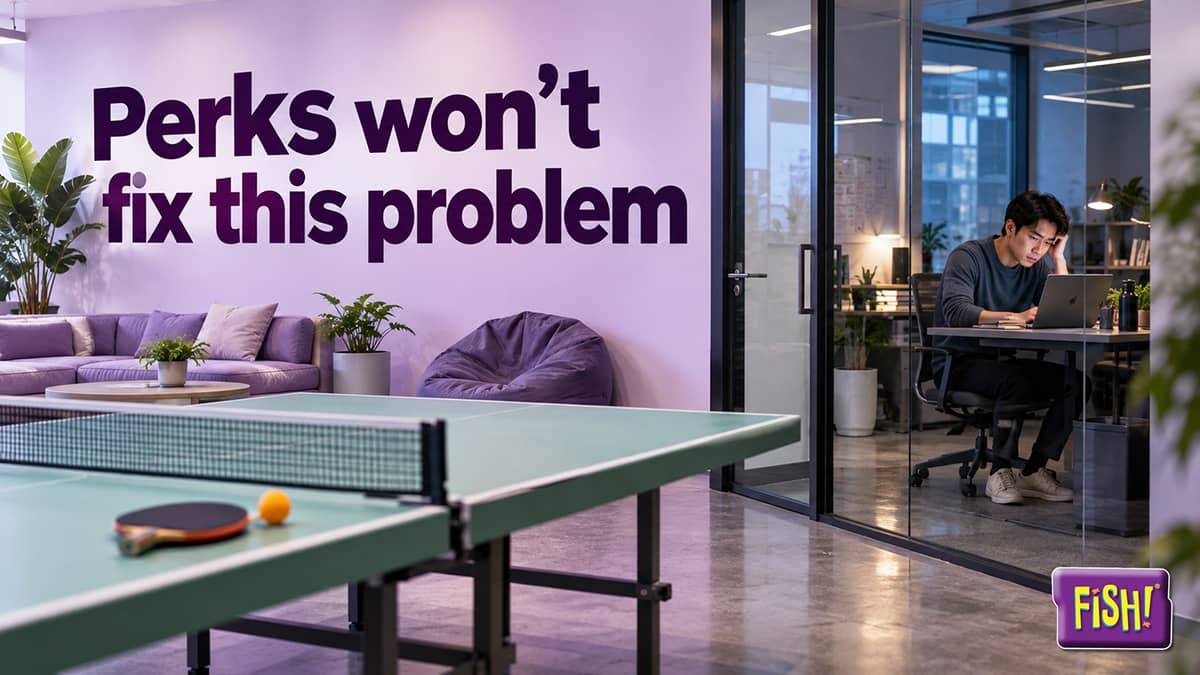
A manager once noticed that Jen had started taking more sick days. She was not coughing. She did not have a fever. On the days she came in, she was reliable, quiet, and always the last person online.
One Friday afternoon, Jen asked to leave early. Her manager hesitated, then asked, “Are you okay?”
Jen looked down at her desk. “I’m not sick,” she said. “I just need one day where no one needs anything from me.”
That sentence should stay with every manager. When people use sick days just to get a break from work, the issue is not a lack of dedication. It may be a sign that work has crowded out rest, connection, and the safety to ask for help.
That is where real employee wellness begins. It is not only a benefit, a fitness challenge, or a cheerful poster about self-care. It is the everyday experience of a person who can recover, feel connected, and speak honestly before stress turns into burnout.
What is employee wellbeing, really?
Employee wellbeing is the health and quality of a person’s life as they move through work and home. It includes physical energy, emotional health, relationships, a sense of purpose, and the feeling that it is safe to be human.
This does not mean a manager can solve every personal problem. It does mean managers shape the conditions around work. They decide, directly or indirectly, whether taking a break is acceptable, whether every request is urgent, whether mistakes are treated as learning moments, and whether someone can say, “I am struggling,” without being labeled difficult.
The most useful question is not, “What wellness perk should we add?” It is, “What is making it hard for people to be well here?”
Real rest – the best habit for employee wellness
Many people do not need another productivity trick. They need a real stop.
A real stop is more than closing a laptop while thinking about tomorrow’s tasks. It is time when the nervous system is not being asked to perform, respond, or absorb more information. Quiet, sleep, an unhurried meal, a walk, or time with family and friends can help a person return with more energy and focus.
This is one reason constant stimulation can make work harder. If every break is filled with notifications, short videos, and urgent messages, the mind never gets much room to settle. A person may be away from work without actually recovering from it.
Managers can make rest more normal by modeling it. Take lunch away from the screen. Use vacation days. Avoid praising people for working through illness. Do not send “quick questions” late at night and call them optional when everyone knows a response is expected.
Look closely at the calendar, too. A day packed with meetings leaves no space for thinking, catching up, or breathing. A team that has no margin will eventually use sick days as emergency recovery days.
That pattern is not a character flaw. It is information about workload and boundaries.
Connection is not an extra; it protects employee well-being
A team can be busy without being alone. Unfortunately, many burned-out employees experience both: too much work and too little human support.
In one story from a military team facing an intense pace, leaders first assumed people needed more time off. Then someone asked how many felt lonely. Many hands went up. The solution was not simply reducing the tempo. It was helping people feel seen, supported, and less alone inside the pressure.
Managers do not need to become therapists to create connection. They can check in as human beings, not just as project owners. A useful check-in might be, “How are you holding up?” followed by enough silence for a real answer. It might mean noticing who has stopped joining conversations, who is always working alone, or who has become unusually irritable.
Small moments matter. Learn what people care about outside their job titles. Create room for colleagues to talk before a meeting starts. Celebrate help given, not only targets reached. When someone is having a hard day, a few minutes of focused attention can be more valuable than a large morale event months later.
Connection also grows through friendship. People need relationships that are not purely transactional. They need to know who they can call when life becomes difficult. A manager cannot force friendship, but can help build a team where kindness, respect, and ordinary conversation are welcome.

People recover faster when they feel seen and supported by the people they work with.
This is an important answer to the question, why is employee wellbeing important? People do better when they have enough energy to think, relationships that help them cope, and trust that they belong. These are not soft extras. They affect judgment, patience, creativity, and the ability to stay steady under pressure.
Psychological safety makes asking for help possible
A person may have access to mental health days at work and still be afraid to use them. The formal option is there, but the unwritten message says, “Do not fall behind.”
That gap matters. If employees believe that asking for help will hurt their reputation, they will hide problems until those problems become absences, conflict, mistakes, or resignations.
Managers can close the gap by going first. Say, “This deadline is tight, so let’s look at what we can remove.” Say, “I made a mistake in how I planned this.” Say, “I have too much on my list today, and I need help choosing what matters most.” These statements do not weaken authority. They show the team that honesty is allowed.
When a person says they are struggling, resist the urge to immediately fix, minimize, or compare. Start with, “Thank you for telling me.” Ask what support would be useful. Clarify what you can change, what you cannot change, and which professional resources are available.
A manager should not diagnose an employee or act as a counselor. But a manager can listen, adjust work where possible, point people toward an employee assistance program or other qualified support, and follow up later. The goal is not to make every hard feeling disappear. The goal is to make it safer to name what is happening early.
How to improve employee wellbeing without adding another initiative
If you are wondering how to improve employee wellbeing, start with the work itself. A new app cannot repair an impossible workload. A snack bar cannot make up for a manager who punishes time off.
Try these practical steps:
- Make priorities visible. When everything is urgent, people work longer and recover less. Name the top priorities and say what can wait.
- Audit the boundaries you reward. If you praise late-night replies, people will hear that rest is less valuable than availability.
- Ask before assuming. “What is getting in the way of doing your best work?” often reveals more than a generic wellness survey.
- Build recovery into the week. Protect breaks, reduce unnecessary meetings, and give people time to finish focused work.
- Notice isolation. Pair people thoughtfully, invite quieter voices into conversations, and make connection part of normal team life.
- Treat time off as time off. Do not ask employees to monitor work while they are sick or on vacation unless there is a true emergency.
- Recognize the whole person. Ask about strengths, interests, growth, and life outside the immediate task list.
These steps are simple, but they are not automatic. They require managers to pay attention to how work feels, not only to what work produces.
A culture people can participate in
The strongest approach to employee wellness is not a script managers impose on everyone. It is a shared way of working that people are invited to make their own.
That is where the FISH! Philosophy can help. Near the end of a wellbeing conversation, its four practices offer a plain-language way to turn good intentions into daily behavior: be there for people, bring appropriate play and energy, make someone’s day, and choose your attitude.
These ideas are not a substitute for fair workloads, time off, mental health support, or professional care. They are a way to strengthen the human moments that make those conditions work. “Be there” can become a better check-in. “Make their day” can mean noticing effort that usually goes unseen. “Choose your attitude” can remind a manager that their response sets the tone, even during a hard week. “Play” can restore lightness without making serious work less serious.
The philosophy works best as an invitation, not a mandate. Give people room to explore what the practices mean in their role. Let the team create examples that fit its work. Use the language to open honest conversations about morale, pressure, belonging, and purpose.
If you are ready to turn these ideas into everyday habits, sign up for the FISH! Philosophy upgraded trial at a discount. The trial includes the original FISH! film plus eight actionable guides and training videos designed to help managers and teams jumpstart a culture transformation. Use the materials to start a conversation about priorities, support, attitude, connection, and the kind of workplace people want to create together.

A healthier culture is not built in one launch meeting. It grows through repeated choices: a manager who protects a break, a colleague who asks for eight minutes, a team that tells the truth about capacity, and a workplace where rest is treated as part of doing good work.
FAQ: Employee wellness questions managers hear
What does employee wellbeing mean?
Employee wellbeing means the overall health and quality of a person’s experience at work and in life. It includes physical and mental health, rest, relationships, purpose, financial or practical stability, and the feeling of safety and respect at work.
How do you get time off work for mental health?
Start by checking your employer’s sick leave, personal leave, mental health day, and employee assistance policies. You may be able to request time off without sharing private medical details. If you are unsure, ask HR or your manager what process to follow. Managers should make the process clear and avoid making people prove they are “sick enough” to rest.
Why do people take sick days when they are not sick?
Sometimes they are exhausted, overwhelmed, lonely, or unable to recover while working. They may be using a sick day as the only safe way to pause. This can signal a problem with workload, boundaries, or psychological safety rather than a lack of commitment.
How do you improve employee wellbeing?
Improve the conditions of work: set clear priorities, protect rest, reduce unnecessary pressure, encourage connection, listen early, and make it safe to ask for help. Wellness resources can support these changes, but they cannot replace them.
What are some examples of employee wellbeing?
Examples include having enough time to sleep and recover, taking breaks without guilt, feeling connected to coworkers, having access to mental health support, doing meaningful work, receiving fair recognition, and being able to speak honestly about workload and stress.