
A great guest experience is built through many small moments. A welcome that feels personal, a question answered with care, or a frontline employee who notices what a guest needs can shape how someone remembers a stay. Aspen Skiing Company’s case study shows what can happen when a company makes those moments part of a shared goal across its workforce.
What did Aspen Skiing Company ask its employees to do?
Pat O’Donnell, President/CEO of Aspen Skiing Company, encouraged each of the company’s 3,400 employees “to make just one emotional break-through with one guest each day.” The company described that goal as a minimum of 3,400 special connections daily.
The goal was simple, but it pointed employees toward the emotional side of guest service. FISH! reminded Aspen employees that they had the power to bring a positive attitude to work each day. The company said this encouraged more workers to do an inspired job every day. When workers were having fun and making the customers’ day, they also discovered a deeper satisfaction from their work.
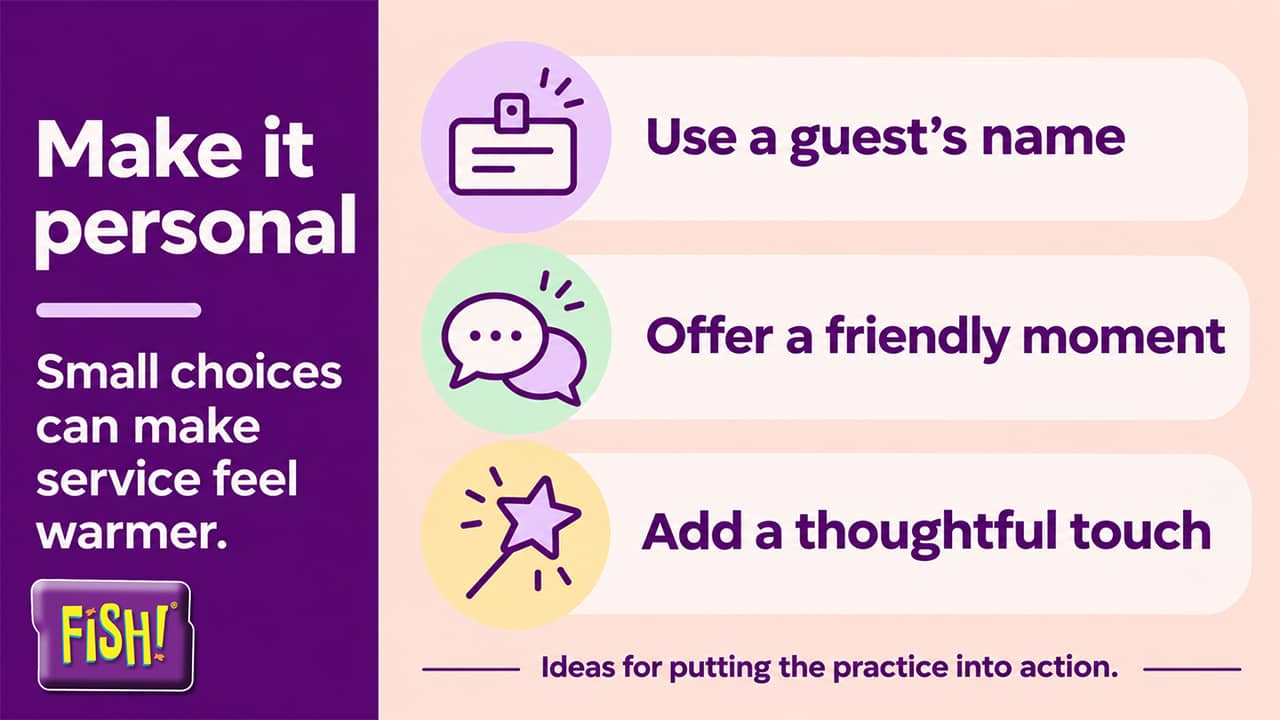
Small, personal choices can make a routine exchange feel warmer to a guest.
O’Donnell said, “These ideas and energy are coming from the ground up. The front line is running the company. The managers and I are just supporting their efforts.” Katie Marshall, Aspen Skiing Corp., said, “I preview a hundred videos a year and I couldn’t find anything our employees could relate to. But everyone who has seen FISH! loves it!”
The 3,400 special connections daily was the goal O’Donnell set for his employees, not a count of what happened. Aspen Skiing Company was one of many organizations whose results with the FISH! Philosophy have been documented.
What makes a great guest experience?
A strong hospitality guest experience covers the whole stay, from communication and ease of assistance to problem solving and the feeling of being welcome.
Those touchpoints can be smooth and still feel forgettable. Memorable moments often come from emotional connection: someone listens closely, notices a need, or adds a personal touch that fits the situation. That attention gives the service a human quality.
That is why a goal focused on one emotional breakthrough can be useful. It asks employees to look beyond completing a task and notice whether a guest feels more confident, calmer, happier, or more connected after the interaction. Often, a sincere conversation or thoughtful response can change the tone of a guest’s day.
How can frontline employees create memorable moments for guests?
Frontline staff create memorable moments because they are close to the guest’s real experience. They hear the question a website did not answer and see the hesitation a standard process might miss. They can respond while a small problem is still easy to solve.
The first FISH! practice that helps here is Be There, which means complete physical, mental, and emotional presence. An employee who keeps attention on the guest is more likely to hear the full question, notice the guest’s mood, and respond to the situation with a fitting answer. The interaction gets the attention it needs, while the employee still recognizes when other duties require care.
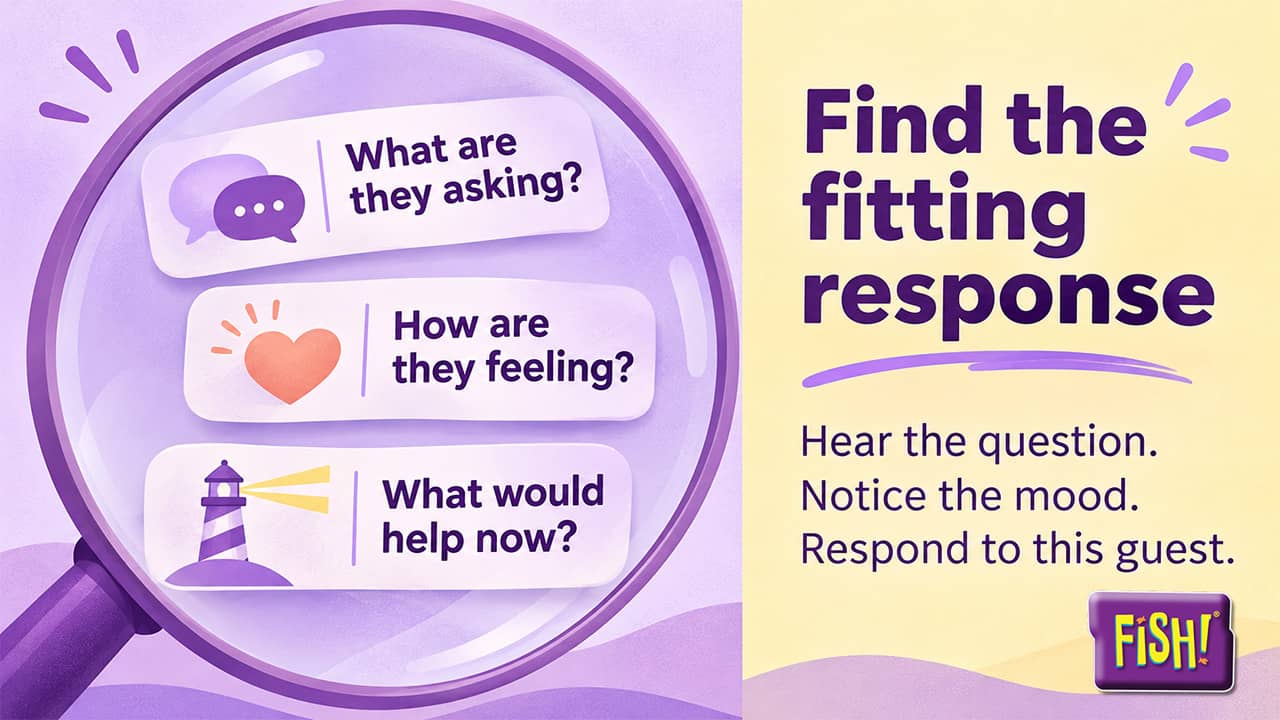
Hearing the full question and noticing the guest’s mood make a fitting response possible.
A useful habit is to notice divided attention. Is the employee looking away, rushing, or preparing a reply before the guest finishes? Bringing attention back to the person in front of you can make a routine exchange feel personal.
Make Their Day builds on that awareness by leaving another person better off and showing that their effort, choices, and presence matter. In a resort or other hospitality setting, that might mean acknowledging a guest’s excitement, helping someone feel less lost, or offering a sincere compliment when it fits. Genuine care matters because guests can sense when a gesture is forced.
Leaders can help by giving employees room to use judgment. Personalized service becomes difficult when every response must follow a rigid script or when staff members fear blame for trying to help. Clear boundaries still matter; within them, employee empowerment lets frontline workers answer the person’s need while respecting the procedure.
How does emotional connection improve guest experience?
People often remember how an interaction made them feel even when they forget the details. A guest may not recall every direction or transaction, but they may remember feeling welcomed, respected, or taken seriously. That memory can influence whether the stay feels worth repeating.
Emotional connection also helps when something goes wrong. A delay, confusing instruction, or service mistake can become more frustrating when the guest feels ignored. A present employee who acknowledges the concern and stays engaged can protect trust while working toward a solution, helping the guest feel that a real person is paying attention.
Choose Your Attitude gives employees a practical way to approach these moments. Hard situations remain hard, and the practice asks people to notice the attitude they are bringing into an interaction before choosing how to approach the next moment. That choice can happen before a shift and again after a difficult exchange.
A team can discuss the attitude it wants to bring to uncertainty, complaints, and changing plans. Leaders matter because employees watch how they carry themselves. Calm attention and respect under pressure give the team a clear example, while demands that leaders do not follow themselves weaken the message.
How can a large resort keep guest service consistent?
Guests need a dependable level of care, while employees still need freedom to respond to different people and circumstances. That balance is especially important in a large operation with many roles, shifts, and seasonal employees.
Shared language can help teams describe good service in terms people can use during real interactions. Be There keeps attention on the guest, while Make Their Day encourages meaningful recognition and small acts of care. Choose Your Attitude supports thoughtful responses under pressure, and Play brings curiosity, energy, and creativity to problem solving.
Play is a mindset that brings curiosity to a question, energy to a welcome, and creativity to a service problem. It does not ask employees to turn work into a joke or act childish with guests. This approach can help them find better ways to solve problems and make the guest’s experience easier.
Leaders can reinforce consistency through conversation and recognition. After a busy period, a team might discuss where guests seemed confused, where service felt human, and what could improve. Specific, sincere recognition works best when it names the behavior and its effect, giving the employee more than a general “good job.”
This approach also respects work that happens out of sight. Employees in support roles affect the guest experience even when they never speak with a guest, because smooth handoffs, useful information, and care between departments make frontline service easier. When coworkers improve one another’s work, guests feel the benefit.
How can leaders turn a guest-service goal into daily action?
A broad goal becomes useful when employees can connect it to the next person they serve. “One emotional breakthrough with one guest each day” gives a memorable direction and invites people to notice and care. FISH! guidance warns that rigid checklists can make Make Their Day feel forced.
Leaders can ask when a guest seemed more at ease and what helped. They can also ask where a process got in the way and what would make the next experience clearer or more personal. These questions bring frontline knowledge into the room.
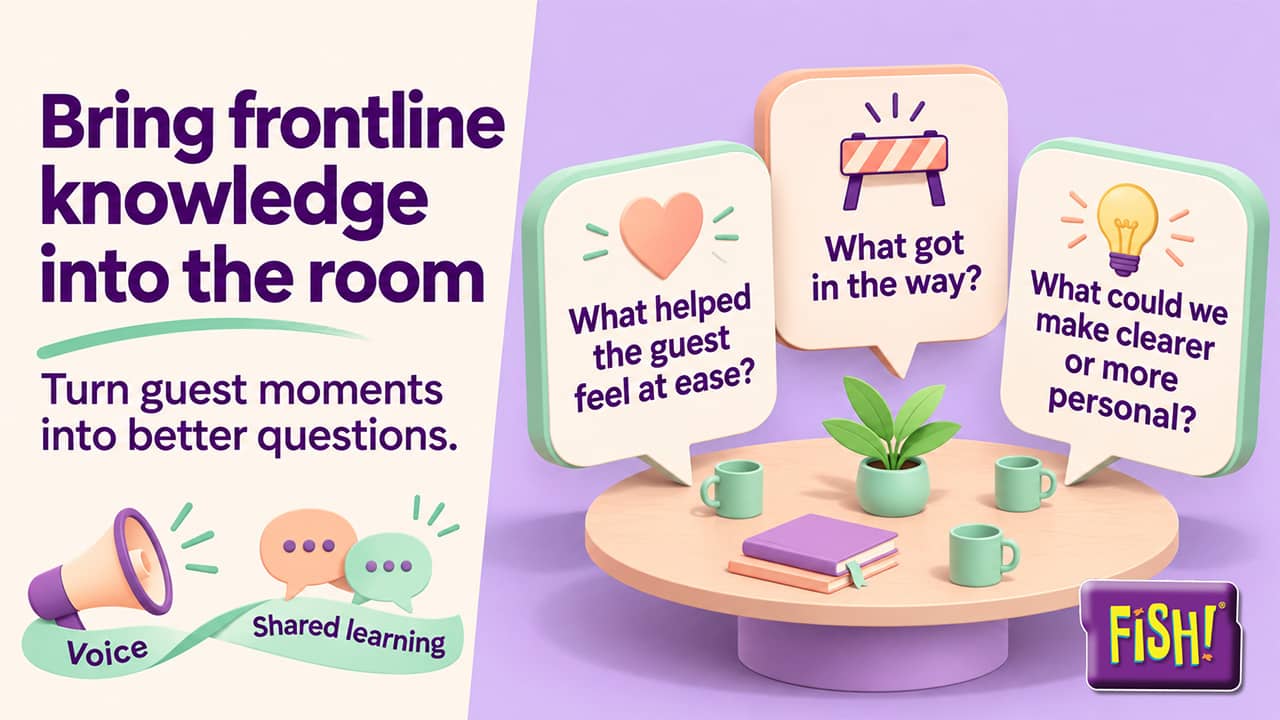
Frontline employees often see the moment behind the feedback, so their answers make team conversations better.
The same conversation can include employees’ experience of the workplace. When workers feel supported, recognized, and able to use good judgment, they have more energy to offer guests.
Leaders can use Choose Your Attitude to invite honest reflection, Be There to listen to employees, and Make Their Day to shape recognition between departments. Play then opens room for new ideas.
Together, the practices create a working culture with a shared question: who do we want to be while doing this work? That question can guide a greeting, a handoff, a difficult conversation, or a creative solution to a guest’s problem.
A guest experience lesson worth trying
Aspen Skiing Company’s story is brief, but its central lesson is clear: a large workforce can focus on the human meaning of small interactions. One employee’s attention may change one guest’s day. Repeated across a team, those choices can shape the feeling of an entire hospitality experience.
Start with one moment when a guest, customer, or coworker needs more than a quick transaction. Be There long enough to understand the person, then Choose Your Attitude before responding. Look for a genuine way to Make Their Day, bring Play’s curiosity to the solution, and talk with the team about what it learned.
Try the FISH! Philosophy with your team
If you want to help your team improve guest experience through presence, positive choices, meaningful connection, and creative energy, try the FISH! Philosophy upgraded trial. It gives a team 30 days of access to the FISH! film and its digital guides, so your people can start putting these ideas into practice and build a shared language for better guest service.

Frequently Asked Questions
How is guest experience different from customer service?
Customer service is often one part of a person’s interaction with an organization. Guest experience is broader and includes the full journey, from communication and ease of use to the emotional impression left by many touchpoints. Improving one service exchange helps, but a strong experience depends on how the pieces work together.
What should a hospitality team measure when improving guest experience?
Teams can combine operational measures, such as response times or recurring problems, with feedback about how guests felt and what they found difficult. Numbers can show where attention is needed, while comments and conversations can explain why. A team should avoid treating a single score as the whole experience.
How can a team learn what guests value most?
Invite guests to share feedback soon after important touchpoints, then look for themes in what they praise, question, or find difficult. Pair those comments with frontline observations, because employees often see the moment behind the feedback and can suggest a practical improvement.
How can seasonal employees learn a company’s service culture quickly?
Give them a small set of clear ideas, show what those ideas look like in real interactions, and let experienced employees explain the reason behind them. Short team conversations and specific recognition can make the culture easier to understand than a long rule list. The goal is shared judgment, not identical personalities.
Can the FISH! practices apply outside resorts and hotels?
Yes. Be There, Choose Your Attitude, Make Their Day, and Play can guide interactions with customers, coworkers, and other teams in many workplaces. The same practices help people notice needs, respond with care, and bring more creativity to everyday work.