
Managing remote teams means moving beyond office meetings on video calls. People lose the small moments that once happened in hallways, at shared desks, or on the way to lunch. A quick request for help, a check-in after a hard morning, or a few minutes of friendly conversation can strengthen a team without anyone scheduling it. When people work from different places, a manager has to create those moments on purpose while also giving the team clear goals, useful tools, and room to do good work.
The FISH! Philosophy offers a helpful human lens for this work. This article pairs practical management habits with ways to keep trust and connection strong at a distance.
How do you manage a remote team effectively?
Start by building a simple operating system that answers the questions people ask every week: What are we trying to achieve? Who owns each part? How will we communicate? When should we meet? How will we know we are making progress? Clarity lowers needless worry, so trust has room to grow.
Set clear expectations and goals
Translate broad priorities into a few specific outcomes for each person and project. Explain what success looks like, what decisions a team member can make alone, when to ask for help, and which deadlines are firm. Put these agreements in a shared document so people can find them without waiting for a meeting.
Measure results, quality, customer impact, and progress toward agreed goals. Hours online, green status dots, and instant replies are weak substitutes for meaningful work. If a deadline is missed or quality slips, address the evidence directly. If the work is on track, avoid creating activity reports simply to reassure yourself.
Remote work still needs the fundamentals of good management: regular check-ins, reasonable deadlines, clear expectations, and honest feedback. Those basics give an attitude of trust a practical foundation.
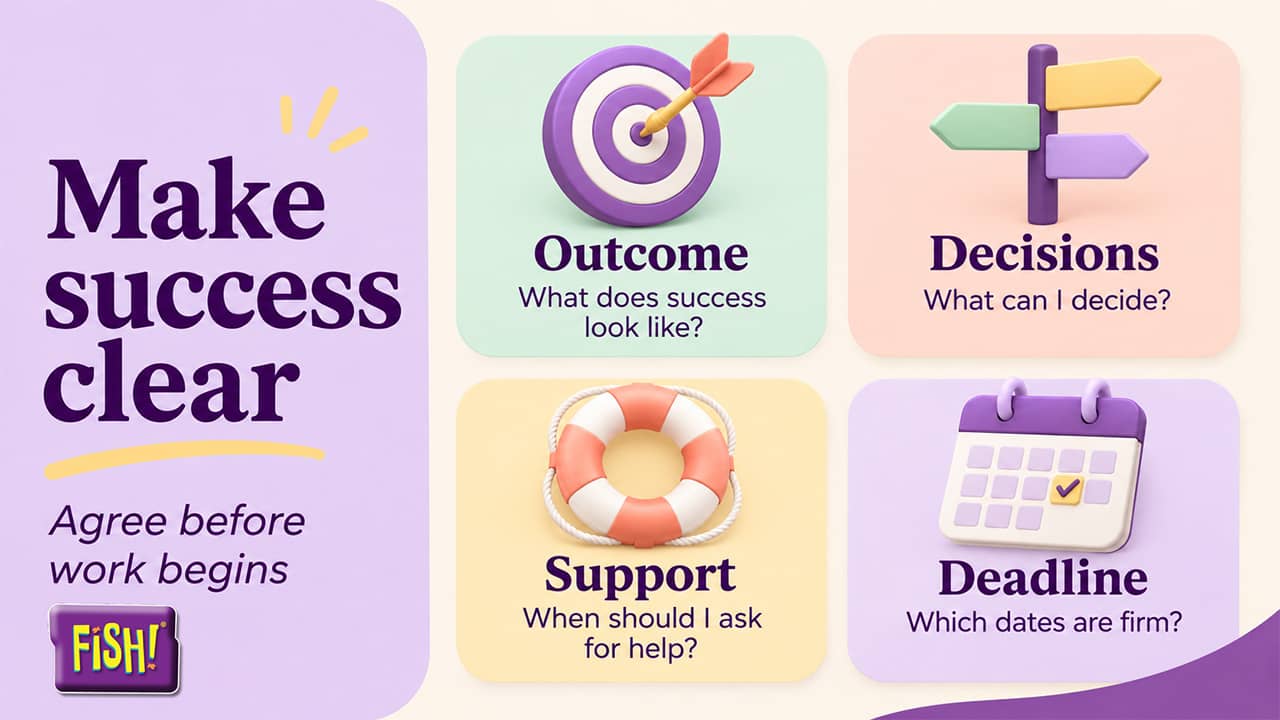
Remote employees can’t lean over to ask a quick question, so agreeing up front on the outcome, decision rights, when to ask for help, and which dates are firm gives them what they need to work on their own with confidence.
Agree on tools and response times
Virtual team communication becomes easier when every channel has a job. For example, use chat for quick questions and urgent coordination, email for information people may need to find later, shared documents for working drafts, and a project board for owners, dates, and status. Decide what counts as urgent and what response time is reasonable. A message sent at 10 p.m. should not silently become a demand for an immediate answer.
Also create an off-topic chat channel for photos, hobbies, celebrations, or a question of the day. It gives people a virtual version of the casual conversation that disappears when there is no shared break room.
Keep a steady rhythm of connection
Use remote one-on-ones for more than status reports. Keep the first few minutes open for life outside work and ask, “How are you?” with enough attention to mean it. Be There calls for physical, mental, and emotional presence, so close other tabs, listen without planning your reply, and notice when someone needs a fuller conversation.
A weekly team check-in can cover priorities, obstacles, and decisions, with a small amount of space for people to know one another. Rotate a question of the day or use occasional breakout rooms so colleagues connect beyond their usual partners. A manager does not need to turn every meeting into a game. The point is to make human connection part of the work rhythm.
How can a manager build trust with remote employees?
Many managers feel a loss of control when they cannot walk past a desk or see who is in a conference room. That fear can lead to micromanagement: constant pings, unnecessary meetings, screenshots, or attention to online status. Choose Your Attitude invites a different response. Notice the fear, then choose trust as the attitude you bring to the relationship.
Trust grows from dependable behavior. Keep your promises, share context, give people a voice in decisions that affect their work, and follow up when you say you will. Make expectations visible, then give people reasonable freedom in how they meet them. If a problem appears, discuss the result, check the facts, and identify the support needed.
Trust includes active management. A manager who disappears leaves people guessing. Stay available, review progress at agreed points, coach early, and address missed commitments fairly. Structure and trust support each other when the team knows what good work looks like and can rely on the manager to be consistent.
How do you build connection on a remote team?
Remote teams lose unplanned relationship-building, so replace chance with intention. Remember the person behind each profile picture. Ask about a new class, a family milestone, a hobby, or a difficult week when the person has chosen to share it. Honor those details as part of a respectful relationship, never as a form of surveillance.
Connection also depends on inclusion. In a hybrid meeting, make sure people in the room do not get all the eye contact and side conversations. Use one shared agenda and chat space, invite remote participants first at times, and summarize decisions that were made informally. Plan occasional optional social time, such as a virtual coffee or a local get-together for people who live near one another, while respecting that not everyone wants more screen time.
This is where Be There and Make Their Day meet. A specific, sincere thank-you can be public in a team meeting or private in a message, email, or handwritten note. Recognize the behavior and its effect: “Your careful handoff gave the next team what they needed to finish on time.” Small surprises can help too, such as a meal-delivery credit or an optional virtual social hour. Treats are additions to a fair workplace; they cannot replace fair pay, good benefits, or manageable workloads.
When someone is struggling, offer practical help. Ask whether you can take a task, remove an obstacle, or help reset a deadline. A manager who notices and says, “Would it help if I took this off your plate?” makes support concrete.
How do you keep remote employees engaged?
Engagement grows when people have purpose, voice, connection, and a fair chance to succeed. Explain how each person’s work contributes to the customer, the team, or the organization. Invite ideas about processes and priorities, and close the loop when an idea cannot be used so people know it was heard.
Make room for Play, which in the FISH! Philosophy is a mindset of curiosity, energy, and creativity. When you are stuck, call a quick brainstorming session and invite anyone with an idea to join. Use open-ended surveys for asynchronous input, especially when time zones or quiet thinkers make live discussion difficult. Digital whiteboards, breakout rooms, and shared documents can help people build on one another’s thinking.
Protect the idea space. “That won’t work” can shut down creativity even when the speaker means to be practical. Ask what problem an idea might solve, what a small test would look like, or what would need to change for it to work. Clear boundaries make Play safer: explain the budget, deadline, customer need, or policy, then give the team room to experiment inside those boundaries.
What are the biggest challenges of managing remote teams?
Isolation and weak relationships
People may appear productive while feeling disconnected. Create recurring personal check-ins, keep an off-topic channel alive, pair people across projects, and watch for team members who are always left out of informal conversations. Connection should be available without making social events mandatory.
Miscommunication and information gaps
Written messages can hide tone, and hybrid teams can make decisions in side conversations. Use the channel that fits the message, document decisions, and ask people to restate owners and next steps. If a topic becomes tangled in chat, move it to a short call and record the outcome.
Time zones and uneven access
Do not make one region carry all the early or late meetings. Publish working hours, mark local time zones on calendars, rotate meeting times when needed, and make important information available asynchronously. A decision should not depend on someone being awake at the right moment.
Burnout and quiet withdrawal
Distance makes warning signs easier to miss. Watch for repeated late work, shrinking participation, missed details, unusual delays, or a person who stops asking for help. Ask about workload and energy directly, then adjust priorities, deadlines, or support. Help the remote employee work sustainably by discussing practical needs and arranging useful support.
A new employee starting alone
Onboarding needs more than a login and a list of links. Give the new hire a clear first-week plan, a named buddy, introductions to key partners, recorded explanations of common processes, and early work that builds confidence. Schedule frequent short check-ins, explain how the team communicates, and invite questions that may feel too small for a formal meeting.
What are common mistakes remote managers make?
One mistake is treating visibility as performance. Online presence can be useful for coordination, but it cannot tell you whether someone solved the right problem well. Another is overloading the calendar with meetings because the manager has not documented decisions or goals. Meetings should help people decide, learn, connect, or unblock work.
Managers also make the mistake of offering generic praise only during formal reviews. Specific recognition is more believable and helps people understand which behaviors matter. Others rely on virtual parties to repair a team that lacks clarity, fair treatment, or support. Make Their Day works through sincere, timely care, while sound policies handle the larger conditions of work.
A final mistake is shutting down ideas through rushed reactions. Facial expressions, interruptions, sarcasm, or a distracted response can teach people that creativity is unwelcome. Pause, ask a curious question, and explain constraints with respect. Your own example is how Choose Your Attitude spreads through a team.
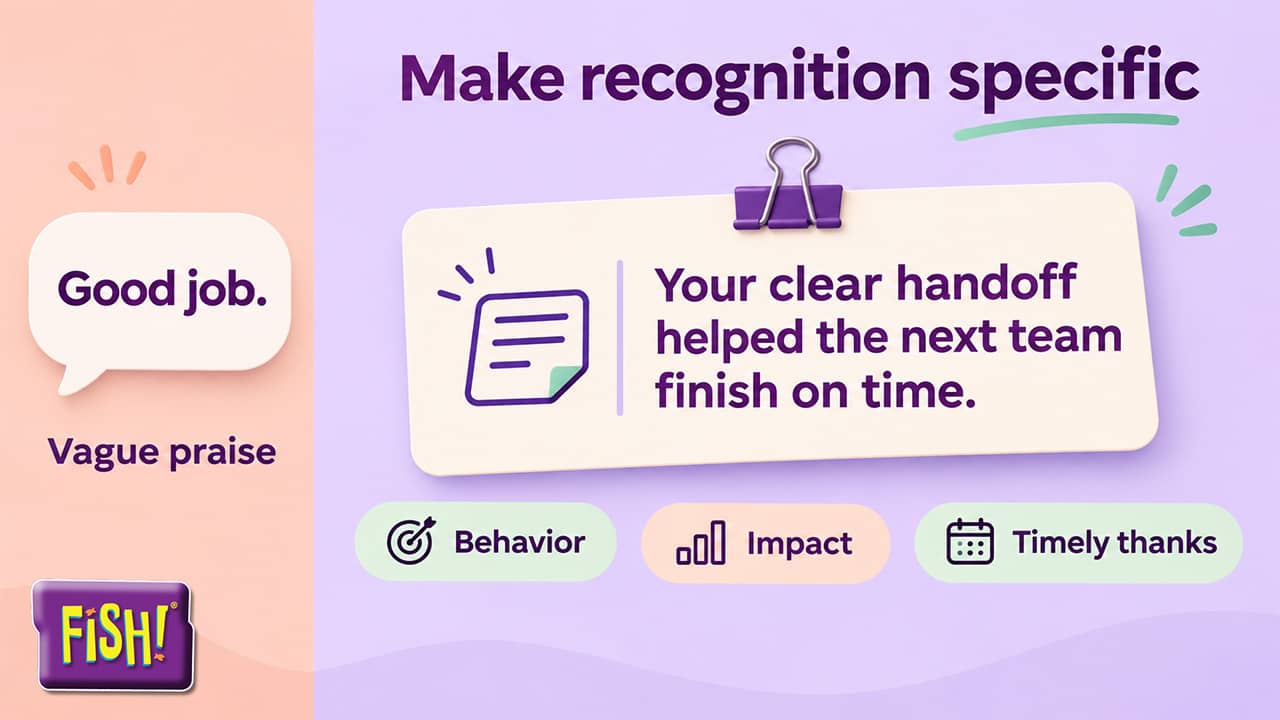
On a remote team, a quick “good job” in chat is easy to scroll past. Naming the behavior and its impact, soon after it happens, shows the person you noticed their work from a distance.
A weekly framework for managing remote teams
Use this short review at the start or end of each week:
- Outcomes: Are priorities, owners, and deadlines clear?
- Communication: Are people using the right channel, and are decisions documented?
- Presence: Have you given each direct report focused time and asked how they are doing?
- Belonging: Has everyone had a fair chance to contribute and connect?
- Support: Is anyone overloaded, isolated, or blocked?
- Ideas: Where could the team test a better way of working?
- Leadership: Did your actions show trust, steadiness, and care?
This framework works for fully remote teams and for hybrid team management because it centers outcomes and relationships. It also gives you a way to notice small problems before they become expensive ones.
Questions to reflect on
- Do you ask remote and hybrid team members how they are doing emotionally, or do most of your conversations begin with a task?
- What point of connection from a shared workplace does your team miss, and how could you recreate it with the tools you already use?
- When was the last time you created a dedicated space for your team to brainstorm? What idea could you invite them to explore this week?
- Which small action could you take tomorrow to help someone feel more seen, supported, or connected?
Lead your remote team with intention
The best remote managers replace accidental connection with deliberate habits. They set a clear playing field, trust people to work within it, stay present in important conversations, and make room for ideas. Try one change this week: reserve five minutes of your next one-on-one for a real check-in, or invite the team to solve one problem on a shared whiteboard. Small actions, repeated with sincerity, can make a distant team feel much more human.
Try the FISH! Philosophy with your team
Invite your team to try the FISH! Philosophy upgraded trial, which gives your group 30 days of access to the FISH! film and its digital guides. Use the materials to start conversations about presence, trust, support, and creative ways of working together, then connect those ideas to the remote-team habits you want to build.

Frequently Asked Questions
How often should a remote manager meet with each employee?
Most teams benefit from weekly or every-other-week one-on-ones, with extra time during onboarding, major projects, or periods of change. The right rhythm depends on the person and the work, but the meeting should be predictable enough that employees do not have to struggle to get support.
Should remote employees be required to keep their cameras on?
Set a clear meeting norm, but allow reasonable flexibility for privacy, accessibility, bandwidth, or a need to focus. Presence comes from attention and participation, so a camera policy should support the conversation and avoid becoming a test of loyalty.
How can a remote manager handle conflict?
Address it early in a private conversation, describe the specific behavior or impact, and let each person explain their view. Then agree on the next action and document what needs to change; if the issue involves harassment, discrimination, or safety, follow the organization’s formal process.
What should a remote team document?
Document goals, owners, deadlines, decisions, operating agreements, and information that another teammate will need later. Good documentation reduces repeat meetings and makes work more equitable for people who cannot attend every live conversation.
How can remote managers develop their leadership skills?
Ask direct reports what helps them do their best work and what makes collaboration harder, then look for patterns in the feedback. Practice one leadership behavior at a time, such as listening without multitasking or giving more specific recognition, and revisit the results with the team.