Great customer service in libraries is more than answering questions or helping someone find a book. It is the feeling a patron carries away after the interaction: welcomed, noticed, and glad to have asked. Cerritos Library built its approach around that idea before opening a spectacular new building, then used the FISH! Philosophy to help its staff make the customer experience stand out as much as the facility.
How did Cerritos Library make its staff as big a draw as its building?
Cerritos Library is a municipal library in Cerritos, Calif. Established in 1973, it opened a new, expanded 88,000-square-foot building in 2002. The building held a collection of 250,000 items, while a staff of 100 served about 3,500 patrons each day. The library described itself as “the experience library of the future.”
With such a striking facility, the library wanted the people inside it to matter just as much. Its goal was to make the customer experience stand out as much as the building. Leaders knew the first step was getting staff excited about their work and infusing the culture with passion and enthusiasm before the new library opened its doors.
The library aimed to make staff as big a draw as the facility, help employees focus on the big picture, make work fun and engaging, and train staff to be “on stage” and to “choose their attitude” at work.
The FISH! Philosophy gave the team a shared language for those goals. The philosophy was introduced in training sessions that included the whole staff. Over time, employees began putting the four practices to work in their own way. Cerritos Library continued to hold a regular FISH! training session every six months for new employees and for anyone interested in a “renewal of spirit.” Between those sessions, teams were challenged to bring different practices to life.
The ideas became part of the workday. In quarterly supervisor meetings, participants shared how they had made someone’s day and how someone else had made their day. Employees translated the practices into language that fit their own culture. “Be there” became “Romancing each other and our customers,” while “make their day” came to include “we are each others customers.”
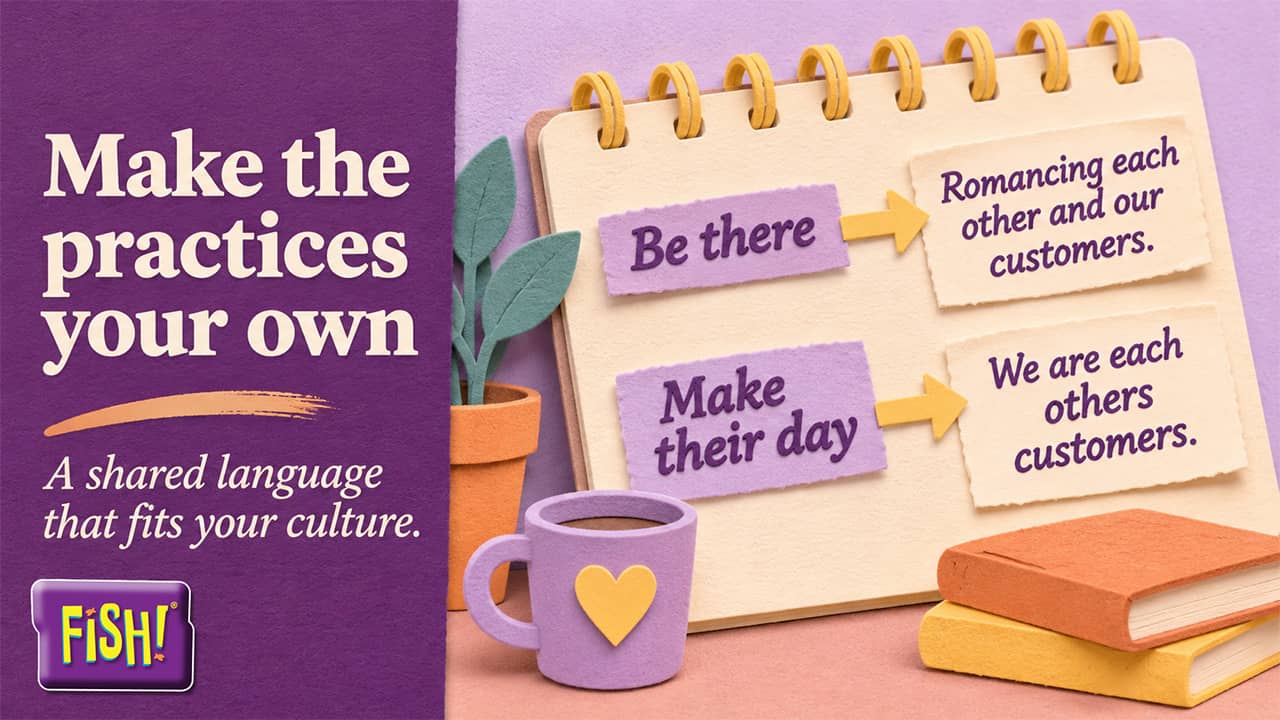
Cerritos Library employees put the practices into language that fit their own culture.
Staff made room for play through costume days, arts and crafts, a comic strip, an interactive website, and life-size characters who met and greeted guests. Morning briefings let staff talk about anything they needed to before customers arrived, sometimes with music and dancing. The library also added an outdoor café with entertainers and karaoke evenings.
The changes showed up in everyday service. Don Buckley, Head of Support Services, said, “We’re there for our customers by proactively helping them. When employees are at the desk, they spend the majority of their time standing up looking for people to help. Standing up or roaming the stacks makes them more visible and more approachable. They don’t just hide behind the desk.”
Small details mattered, too. Jackie Stetson, Library Supervisor, said, “Sometimes it’s the small things that make our customers’ days. We have fresh flowers in our bathrooms and get a lot of praise from customers about how nice and unexpected that is.”
The library also listened to what patrons wanted. In the Old World area, beautiful, leather-bound classics could not be checked out. After patrons said, “We always wanted to read the classics, and with these high-back chairs and fireplace, it’s the perfect setting,” the library developed a classics program.
The reported results covered both employees and patrons. Cerritos Library reported a steady 10 to 15 percent increase in employee satisfaction, along with an improved overall attitude across the organization. The staff received as much customer recognition as the building. In May 2004, Reader’s Digest selected Cerritos as the “Best American Public Library.” In 2003, Experience Economy authors Pine & Gilmore named it the “Experience Stager of the Year.”
The library also reported that, since the new building opened in 2002, circulation had increased 70 percent, from 600,000 to more than 1 million materials circulated per year. A 2003 Godbe Research survey found that the library received the highest level of customer satisfaction of all Cerritos city services. Reservable space was booked every weekend for almost a year ahead of time, compared with about two weekend days per month when the library first opened.
Waynn Pearson, Director, summed up the culture this way: “Great customer service training doesn’t happen overnight. It requires a new way of thinking and an ongoing dedication to the customer. I love that our staff now has fun, even when dealing with difficult situations. This is the best place I’ve ever worked.” Cerritos Library is one of many organizations whose results with the FISH! Philosophy have been documented, offering readers a path to explore other examples as well.
What does great customer service in libraries look like?
Great library customer service begins with attention. A patron may need an answer, a recommendation, help using a resource, or simply a comfortable place. Staff cannot know which one without being present enough to notice.
That is the heart of Be There. The practice means physical, mental, and emotional presence: looking toward the person, listening to the actual question, and staying open even when the patron is upset or sees a situation differently.
This can shape simple habits: acknowledge people, listen before giving a standard answer, and avoid turning frustration about patrons into a team habit. If someone is confused or upset, respond to the experience rather than treating the interaction as a task.
A short debrief can ask where the team missed a chance to listen and what helped a patron feel understood. That turns customer service from a policy into a shared service culture.
How can library staff be more approachable to patrons?
Approachability is partly about body language and partly about location. A staff member who is visible, looking up, and ready to help is easier to approach than someone who appears closed off behind a desk. Cerritos Library described this through standing and roaming the stacks, which made employees more visible and approachable.
Roaming reference works best when staff respect the calm around people who are reading. Be There includes awareness of personal space, along with noticing when someone is searching, looking around, or showing signs that help would be useful. Staff can then offer support without pressure.

Standing up and roaming the stacks made Cerritos staff more visible and more approachable.
How can a library improve employee satisfaction?
Employee satisfaction grows when people feel their work matters, their effort is noticed, and they have a voice in the work. That same care belongs in relationships among coworkers as well as in service to visitors.
Make Their Day offers a practical lens. It means creating moments that leave another person better off, whether that person is a patron, a coworker, or someone in another department.
Recognition is central, but it must be specific and sincere. A supervisor might name the action, explain its effect, and choose a private or public form of thanks that fits the employee.
Cerritos supervisors shared how they made someone’s day and how someone else made their day. Other library teams could use a similar conversation without turning it into a quota.
Questions such as “Who helped you this week?” or “What small action made your work easier?” help people notice useful behavior. The practice works best as an invitation, rather than a demand for cheerful performances.
Choose Your Attitude adds another part of the picture. Problems remain real, and leaders should not use the practice to tell an employee to “fix” a bad mood.
Instead, the practice means noticing what a person is bringing into a difficult situation and choosing how to respond, while leaders model the attitude they hope to see. A morning huddle can create a safe place to name a challenge, ask for help, and decide how the team wants to show up for patrons.
Why does play belong in a public service workplace?
Play brings curiosity, energy, and creativity to the work. Those qualities can improve a service explanation, program, or response to an unusual need.
Play works best when employees know the boundaries and have room to make choices inside them. A team can agree on public-service values and the behaviors that fit them, creating a clear playing field without scripting every situation.
Cerritos employees used costume days, crafts, music, dancing, a comic strip, and an outdoor café to bring energy into their culture. Other workplaces can look at their own teams and ask what kind of self-expression and creativity would help them serve their communities well.
Play should remain respectful, inclusive, and connected to the patron experience.
How can libraries listen to patrons more effectively?
Listening is more than collecting complaints. It means paying attention to what people ask for, what they try to use, and what they say would help them enjoy the library more. The Old World classics program at Cerritos Library shows how a patron comment can become a service idea when staff take it seriously.
A library can invite this kind of input through conversations at service points, program feedback, and a simple question: “What would make this easier or more useful?” Staff can then share patterns instead of treating each request as isolated.
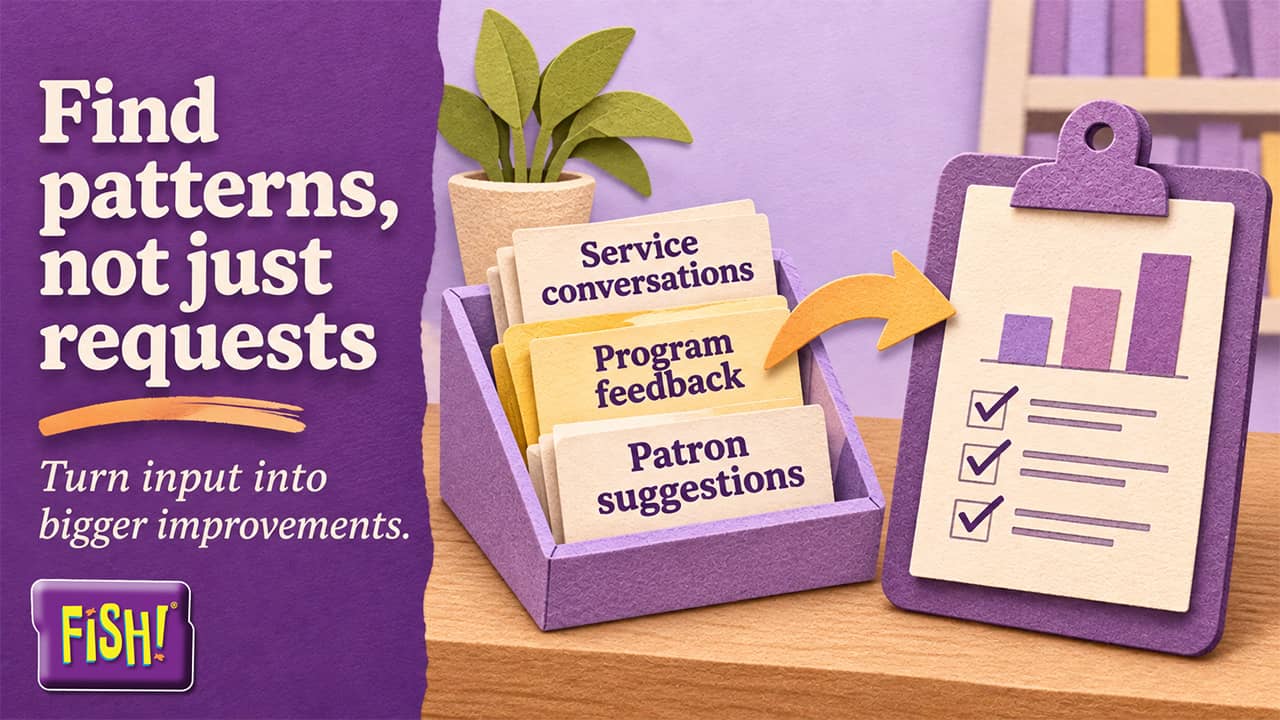
Patron input from many places can show a library what people want more of.
Be There helps the team hear accurately. Make Their Day shows the patron the interest matters, Play creates room to explore it, and Choose Your Attitude helps staff stay open to feedback. Together, the practices turn listening into action without promising every request can be met.
What can other libraries learn from the Cerritos case study?
A building, collection, or program cannot create a welcoming experience by itself. People do that through repeated choices: looking up, listening closely, helping a coworker, noticing a need, and bringing curiosity to the work.
A team could begin with one conversation about the experience it wants patrons and employees to have, then choose a small practice such as a morning huddle, visible roaming reference, or a weekly appreciation story. The change grows when leaders keep the conversation going and let staff put the ideas into their own words.
A simple next step for your service culture
Great customer service is built before the patron asks for help. Try one small change with your team, then ask what it changed for the people you serve.
Try the FISH! Philosophy with your team
If your library team is working on approachability, employee satisfaction, or a more welcoming service culture, try the FISH! Philosophy upgraded trial. Your team gets 30 days of access to the FISH! film and its digital guides, giving you a practical way to start talking about Choose Your Attitude, Be There, Make Their Day, and Play together.

Frequently Asked Questions
How can a library measure customer service without relying only on complaints?
Use several signals, such as short patron surveys, program attendance, comments, service-point observation, and recognition from the community. Patterns across these sources give a fuller picture than formal complaints alone.
What should library staff do when a patron is angry?
Start with Be There: listen, acknowledge the concern, and make sure you understand what the person needs. Choose Your Attitude can help staff respond with steadiness, while clear policies and boundaries keep the interaction respectful.
How can a small library build a service culture with limited staff time?
Begin with a short, regular conversation. A five-minute huddle, one specific thank-you, or a shared question about making the library easier to use can build the habit.
How do you keep staff recognition from feeling forced?
Make it specific, sincere, and suited to the person receiving it. Focus on what the employee did and how it helped instead of using a required quota.