
Walking meetings give a busy workday a useful change of pace. Two or three coworkers can walk, talk, and give one another their full attention. A simple walk and talk can build a stronger relationship, bring fresh energy to a hard afternoon, and open up ideas that may stay hidden at a desk.
The FISH! Philosophy offers a useful way to think about how people show up for one another at work. This article covers how to run walking meetings well and why a walk with a coworker can help people connect, reset, and think more freely.
What is a walking meeting?
A walking meeting is a work conversation held while the participants walk together, usually outdoors or in a safe indoor space. It can be a planned meeting on the move, a short walking one-on-one, or a phone conversation where each person walks separately.
The format works because people are side by side, which can make a conversation feel less formal and more equal, especially when a manager and direct report are talking. The movement also adds energy, and a change of scenery can help people think beyond the same familiar answers.
A walking meeting still needs a purpose. It is a work meeting with movement added, so the group should know what it wants to discuss and what needs to happen afterward. The walk creates better conditions for the conversation and still needs preparation and follow-through.
What are the benefits of walking meetings?
Walking can help people think more creatively
Movement gives the mind a different setting in which to work. In a 2014 study, Stanford researchers Marily Oppezzo and Daniel Schwartz found that walking increased creative output by an average of about 60 percent. That finding helps explain why a walking brainstorm can produce a new connection or a useful next step when a team feels stuck.

Walking gives the mind a different setting to work in, which is why a walking brainstorm can turn up a new connection or a useful next step when a team feels stuck.
The FISH! practice of Play fits here. Play means bringing curiosity, energy, and creativity to the way we work. A walk can make room for that mindset without turning the meeting into a game or asking people to act like someone else.
Walking can restore energy during sedentary work
A short walk breaks up long stretches of sitting, gets people moving, and can help them return to work with more energy. The fresh air or change of scenery may make an afternoon check-in feel more manageable. Regular walk breaks can support workplace wellness and employee wellbeing as part of a broader approach to movement at work.
A walk can help with attitude, too. If a coworker has just come through a difficult call or a frustrating deadline, an invitation to walk may give them space to reset. That is Choose Your Attitude in a practical form: noticing how you are arriving and deciding how you want to approach what comes next. A walk can give someone more choice in how they meet the next part of the day, even when a real problem remains.
Walking can make conversation more open
Side-by-side conversation often feels easier than a formal sit-down. People have something simple to do with their bodies, and a shared route can lower some of the pressure that comes with sustained eye contact. The result may be a more natural exchange about a project or concern.
This is where Be There matters. The practice calls for physical, mental, and emotional presence. Put the phone away, listen without preparing your reply, and stay with what the other person is saying. A walk becomes valuable when the person beside you can feel that their words matter.
Walking can strengthen relationships
A coworker may remember the moment you listened after a rough morning, laughed at the right time, or recognized the effort behind a difficult task. Those small gestures can change how someone experiences the workday.
That is Make Their Day: creating a genuine moment that leaves another person better off. You might ask how a project is going, notice a contribution that has gone unseen, or offer encouragement before a presentation. The gesture should fit the person and the moment, so it feels sincere and personal.
Which meetings work well as walking meetings?
Walking meetings are a good fit when the main work is conversation, listening, or idea generation. Try the format for:
- One-on-ones and relationship-building conversations
- Coaching, mentoring, and career discussions
- Brainstorming or early-stage problem solving
- Project check-ins that need a few decisions
- Debriefs after an event or completed task
- Conversations where a less formal, side-by-side setting may help
Keep the group small. Two people usually create the best flow, while three can work when everyone needs to contribute. A larger group is harder to keep together, hear, and include, especially outdoors.
When should you not have a walking meeting?
Choose another format when the meeting depends on screens, detailed notes, documents, data displays, or a shared whiteboard. A walk also needs a different plan for confidential details, especially on a public route where others may overhear. Large groups, complex presentations, and discussions that require a formal record are usually better indoors or online.
Health, mobility, weather, safety, and personal comfort matter as well. The walk should be an invitation that respects each person’s choice. Offer a seated or virtual option that gives the person the same chance to participate and contribute. Some people may prefer a shorter route, an indoor track, a quiet room, or a phone call while they remain in place.
How do you run a walking meeting?
1. Pick the right meeting
Start with the purpose. Ask whether the conversation needs listening, coaching, brainstorming, or a simple check-in. If participants need to read, present, sign, or record detailed information as they go, choose a different format.
2. Keep the group to two or three people
Small groups make it easier to hear every voice and keep the conversation focused. For a larger team, invite people to take separate short walks or hold a series of two-person conversations, since moving as one crowd makes it harder to include everyone.
3. Tell people ahead of time
Give participants enough notice to choose comfortable clothes and shoes, bring a layer, and plan around the weather. Say how long the meeting will last, whether the route includes stairs or uneven ground, and what alternative is available. That information helps people decide whether the format works for them.
4. Choose a safe route of known length
Walk the route before using it for work. Pick a place with safe surfaces, reasonable shade or shelter, and enough quiet for conversation. A 20-to 30-minute route is often long enough for a focused discussion. Knowing the distance keeps the meeting from running over.
5. Set a simple agenda
Share one to three questions before you leave. For example: What is blocking the launch? Which option should we test first? What support would help this week? A short agenda protects the purpose while leaving room for useful ideas and human conversation.
At the start, agree on the destination, timing, and any sensitive topics. During the walk, take turns speaking and listening. If the conversation shifts into a personal concern, stay present and ask whether the person wants support, a solution, or simply a listening ear.
6. Capture decisions afterward
Capture the discussion after the walk. Send a short recap with decisions, owners, and dates. Add links or detailed notes from your desk if the discussion points to further work. This small step gives the relaxed format the same accountability as any other meeting.
How can remote teams hold walking meetings?
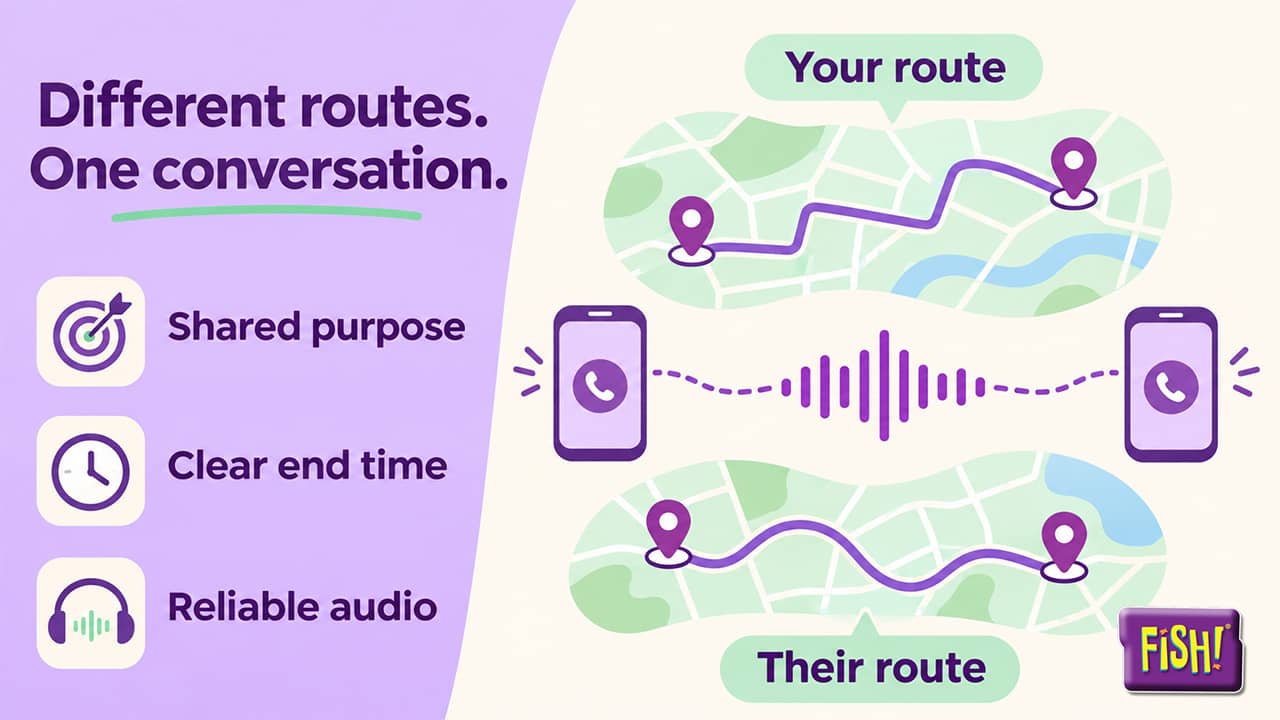
Remote teammates can walk the same meeting from different places, since all they need is a shared purpose, a clear end time, and a phone connection good enough to hear each other.
Remote teammates can hold a walking meeting by phone. Agree on a start time, call each other using headphones that let the walker hear traffic and surroundings, and choose a route that is safe for each person. Participants do not need to walk in the same place. They only need a shared purpose, a clear end time, and enough connection to hear one another. Video is usually a poor match for a moving call because unstable connections and camera angles can distract from the conversation. A phone call can make the format simpler. Begin by confirming that everyone is ready and safe, pause if someone needs to cross a street, and end with a quick recap of decisions. Remote workers who cannot walk can join from a quiet seated space with the same agenda and role.
What common walking-meeting mistakes should you avoid?
The first mistake is treating every meeting as a walking meeting. Match the format to the work and offer another way to join. Another is surprising people at the door with a request to walk, which can create discomfort about clothing, weather, or accessibility.
Avoid routes that are too long, noisy, crowded, or unfamiliar. Keep phones available for safety, and give the conversation your attention by leaving messages until the walk ends. Keep the movement in service of the meeting: a scenic route cannot rescue a vague agenda.
Finally, avoid making the walk compulsory. FISH! is an invitation to try a different way of being at work, and the same principle applies here. When people can choose a format that fits their needs, they are more likely to bring real energy, presence, and useful ideas.
Three simple ways to add more walking at work
A scheduled walking meeting is a practical choice for a walking one-on-one or coaching conversation. Use the steps above to give the conversation a clear purpose and a comfortable structure.
A regular walk break with a coworker can be shorter and more informal, even when the topic is simply how the day is going. It creates a small, repeatable space for Be There and Choose Your Attitude.
A group walk can work as an optional social activity before work, at lunch, or during a break. Keep the pace welcoming, make the route clear, and let people join for part of it. A group walk supports connection without turning movement into another obligation.
Give your next conversation a change of scenery
Walking with a coworker is a small change that can have a wide effect. It gives people room to listen, reset, recognize one another, and think in new ways. Choose one conversation this week that fits the format, invite a colleague, and take a safe route with a simple question in mind. The best result may be a clear decision, a fresh idea, or a coworker who feels a little more supported when you return.
Try the FISH! Philosophy with your team
A walking meeting is one practical way to bring the FISH! Philosophy into an ordinary workday. If your team wants more ideas for being present, choosing its attitude, making people’s days, and bringing creativity to work, try the FISH! Philosophy upgraded trial. Your team gets 30 days of access to the FISH! film and its digital guides, so you can explore these ideas together and start putting them into practice in ways that fit your workplace.

Frequently Asked Questions
How long should a walking meeting last?
Most walking meetings work well in 20 to 30 minutes, especially when the route has a known length and the agenda is short. Longer conversations can work when participants plan for them, but a clear end time helps protect energy and schedules.
What should I wear to a walking meeting?
Wear comfortable shoes and clothing suited to the weather, and bring a layer when conditions may change. Meeting organizers should share those details ahead of time so nobody feels caught off guard.
Can a walking meeting be used for performance feedback?
It can work for thoughtful coaching or feedback when the relationship has enough trust and the setting is private enough for the topic. For sensitive performance concerns, offer a seated or private option and let the employee choose the format that helps them participate fully.
How can I make a walking meeting inclusive?
Share the route, pace, duration, and alternatives before inviting people, then treat every option as equally valid. Ask what would help someone participate, and avoid asking them to explain a health or mobility need in front of the group.
What is a good first question for a walk and talk?
Try a question that is specific enough to focus the conversation and open enough to invite thought, such as “What would make this project easier this week?” Starting with one useful question gives the walk direction without crowding out a natural exchange.