
Great restaurant customer service helps guests feel seen, comfortable, and confident that someone is paying attention. The strongest service often comes from a small choice made in the moment, when a server or host notices what a table needs before anyone says it. The story below shows how that kind of attention can turn an ordinary meal into a lasting memory.
Pasta and Hugs
Here’s a great FISH! story from one of our former colleagues:
On my birthday a couple of years ago, my wife, kids and in-laws took me to an Italian restaurant known for its festive environment. Our waitress was a young woman named Karen. She had a warm, vivacious personality, and a sixth sense for when we needed her. She was a great waitress. But it was after our food had arrived that Karen created a memorable and delightful moment for us.
This was the type of restaurant where the food is served family style and you pass it around the table. Karen came up to our table and noticed that my girls, who were six and eight years old at the time, only had bread on their plates. My girls are not very experimental when it comes to spicy Italian food. Karen got down on her knees, put her arms around the girl’s shoulders and whispered to them, “What would you girls really like”? The girls thought for a moment and then whispered back, “We like plain noodles and butter.” With a twinkle in her eye Karen whispered, “I’ll be right back.” Less then five minutes later Karen returned to our table carrying two silver bowls, heaped with plain pasta noodles with pads of butter melting on them. My girls beamed as Karen set the bowls in front of them, and they each gave Karen a big hug.
Every facet of the FISH! Philosophy was on display during Karen’s interaction with the girls. Through her choice to Be There for us, Karen saw the opportunity to playfully and creatively make the girls’ day. Karen clearly chose an attitude of positive engagement to work with her that day. I suspect Karen had created many similar experiences with previous patrons, and that these experiences made it easy for Karen to choose a positive attitude and have more fun at work.
By living the FISH! Philosophy, Karen left us with a special memory of herself and the restaurant.
Question to ponder:
Being positive, present and making people’s day seemed to come naturally to Karen. It’s not always so automatic: What can you do to remind yourself to choose a FISH! attitude as you go about your day?
What does the Pasta and Hugs story teach about restaurant service?
The story gives restaurant teams a useful way to think about hospitality. Karen’s service reflects all four FISH! practices working together: Choose Your Attitude, Be There, Make Their Day, and Play. These practices are a shared language for deciding who you want to be while you do your work, especially when a shift is busy or a situation falls outside the usual steps of service.
Karen’s attention shows what it means to Be There: staying tuned to the people in front of you instead of moving through a routine. That attention creates the opening for Make Their Day, leaving someone better off through a sincere action. Her creative response also carried the spirit of Play, which brings curiosity and problem solving to work without requiring a performance or joke.
Choose Your Attitude supports the other practices. A server can choose patience before a shift, then choose it again after a difficult table or mistake.
Try it this week by asking during each shift: Who needs my full attention? What detail could make this guest feel remembered? What creative response fits our standards? Share one answer with a teammate.
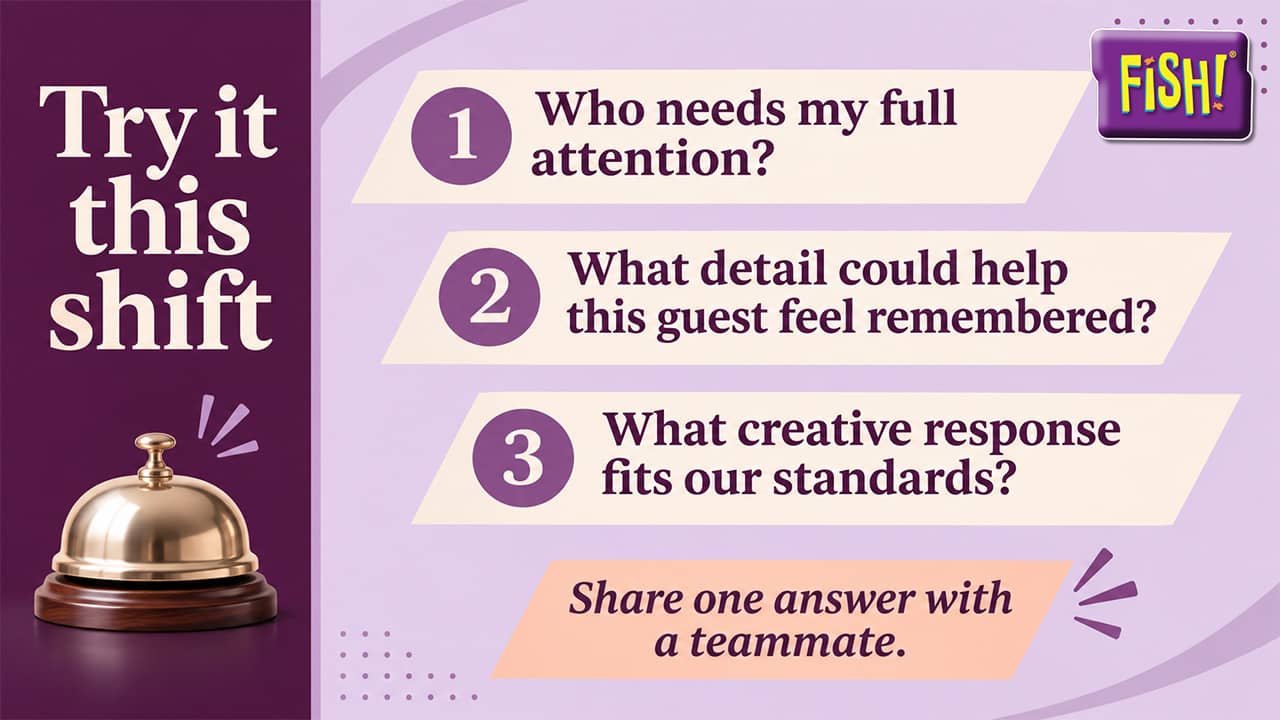
Asking these three questions during a shift, and sharing one answer with a teammate afterward, turns attention to guests into a habit the whole team builds together.
What does good restaurant customer service look like from the guest’s point of view?
From the guest’s point of view, good restaurant customer service feels smooth, personal, and respectful. Guests know what is happening, receive help without having to chase someone down, and feel free to enjoy the meal at their own pace. They also sense when staff are working together, because the host, server, runners, and kitchen seem to share responsibility for the table.
What are the moments when restaurant service matters most?
1. The greeting
Welcome the table promptly, make eye contact, and give guests a clear sense of what comes next. If the host is helping another party, a brief acknowledgment still matters. A warm greeting can be simple: “We’ll be right with you. Thanks for waiting.”
2. Taking the order
Listen for the details behind the order. A guest may be asking about allergies, timing, ingredients, or a child’s preferences. Repeat important information, answer honestly, and involve a manager or kitchen teammate when you need a reliable answer. Be There means listening to understand instead of planning your next table-side sentence.
3. Checking back
Check in soon enough to catch a problem while it can still be fixed. Look at the table as you approach, because empty glasses, untouched food, searching eyes, or a guest trying to get another person’s attention can tell you what to ask. Use a specific question when it helps: “Is the temperature right for you?” or “Would another plate help with sharing?”
4. Handling a problem
A mistake tests the restaurant’s service culture. Listen without interrupting, acknowledge the impact, and explain the next step. Then follow through and return to confirm that the solution worked. A guest should not have to repeat the same concern to several people.
5. The goodbye
Close with the same care you brought to the greeting. Thank guests, help with a last request, and acknowledge a return visit or special occasion when you know about it. The goodbye is also a chance to invite feedback in a natural way and leave the door open for the next visit.
How can servers improve customer service during a busy shift?
Servers improve customer service in restaurants by practicing attention in small, repeatable ways. Before entering the dining room, take a breath and choose the attitude you want to bring. During each table visit, put away distractions, look at the person speaking, and finish listening before you answer. After a difficult interaction, reset so the next table receives a fresh start.
Read the table before reaching for a script. A family with a tired toddler may need speed and extra space. A couple having a quiet conversation may prefer fewer interruptions. A group celebrating may welcome energy, while another group may want the occasion handled privately. Ask when you are unsure, then respect the answer.
Use the team. If a table is waiting, confused, or becoming frustrated, bring in the person who can help before the guest has to ask. Kitchen staff also shape the guest experience, so a clear callout about an allergy or timing concern can protect the meal and the relationship.
What are practical ways to notice what guests need before they ask?
Observation works best when it is paired with judgment. Staff can watch for signals without hovering or making assumptions.
- Notice pace. Guests who are looking at the door, checking a phone, or asking about timing may have a schedule to protect.
- Notice sharing needs. Extra plates, serving utensils, small portions, or a high chair can make family dining easier.
- Notice comfort. A guest moving a menu to block a draft, rubbing a child’s hands, or looking for a quieter seat may need a practical adjustment.
- Notice uncertainty. Long pauses, repeated glances at the menu, and questions about ingredients are invitations to offer clear help.
- Notice celebration. A birthday card, flowers, a dressed-up table, or a guest mentioning an achievement may open a chance for a sincere acknowledgment.
- Notice regulars. Remember a preference when you are confident, and check rather than announce it as a fact if you are unsure.
The goal is thoughtful service that gives guests more ease. Be There includes knowing when to step closer and when to give people room.
How should restaurant staff handle a complaint or mistake?
Start by giving the guest your full attention. Let them explain, then say what you heard: “I understand that the entrée arrived cold and that you have been waiting.” This shows that the concern reached a person, not just a process.
Next, apologize for the experience and state the action you will take. Avoid blaming the kitchen, another server, or the guest. If the solution requires a manager, make a warm handoff and stay accountable for the follow-up. A replacement dish, corrected check, or honest update matters because it shows the restaurant is taking responsibility.
When the problem is resolved, check back. The guest may need a new utensil, fresh side dish, more time, or a simple acknowledgment that the correction was completed. Choose Your Attitude helps staff respond with steadiness, while Be There keeps the response connected to the person’s actual concern.
Managers can learn from complaints by asking what the guest experienced, where the handoff failed, and what change would prevent a repeat. Recognize the employee who handled the recovery with care.
How do restaurants make families, regulars, and celebrations feel remembered?
Remembering guests starts with genuine attention. Use names when guests offer them, keep useful preferences in the restaurant’s approved notes, and share details with the next team member in a respectful way. A regular should feel recognized, not monitored.
For families, make the meal easier with practical help: child-sized utensils, a quick first drink, space for a stroller, or a flexible side when the menu allows it. For celebrations, ask how the guests would like the occasion handled. Some want a lively moment; others prefer a quiet congratulations. Make Their Day works best when the gesture fits the person.
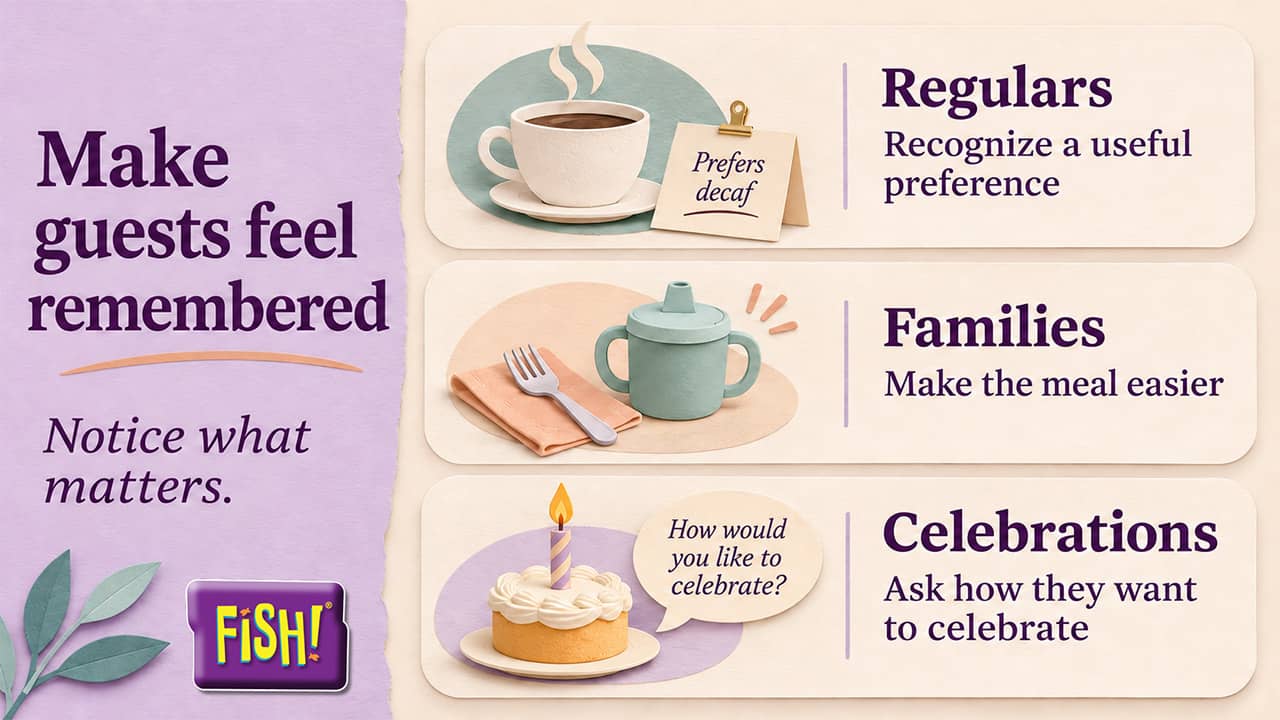
Guests feel remembered when staff notice what matters to them, such as a regular’s preference, a family’s need for an easier meal, or the way a table wants to mark a celebration.
What are restaurant customer service examples guests remember?
These small moments can become habits for a team:
- A host finds a quieter table for a guest who is overwhelmed by the dining room.
- A server brings a spare plate before a family has to ask for one.
- A kitchen teammate catches an allergy concern and confirms the safe preparation plan.
- A manager gives a specific thank-you to the dishwasher whose work kept the rush moving.
- A server notices that a regular has brought a new guest and welcomes both people.
- A team member offers a calm update when an order is delayed, then returns when promised.
- Staff ask a celebration table how they would like to be recognized instead of assuming.
- A server finds a creative, approved solution for a guest whose needs do not fit the usual routine.
How can managers build a service culture across the front of house and kitchen?
Managers build service culture through example and conversation. Be present in the dining room, listen to staff, and show the attitude you want the team to bring to guests. A manager who stays calm during a rush gives employees a model they can use.
Make training concrete. Practice greetings, order clarification, table reading, complaint recovery, and handoffs between front of house and kitchen. Then discuss real situations from the week. Ask, “Who needed our full attention?” and “Where did we make someone’s day easier?” These questions keep the culture connected to actual work.
Give the team a clear playing field. Explain the boundaries for discounts, substitutions, allergy procedures, guest privacy, and celebration gestures. Within those boundaries, invite staff to suggest better ways to handle unusual needs. Play supports creativity when people know what is safe, what requires approval, and how the team will learn from a mistake.
Recognize specific behavior, including work guests may never see. Thank a food runner for catching a missing item, a host for protecting a family’s seating request, or a cook for communicating a delay early. Recognition should be sincere and appropriate to the person receiving it, so private appreciation may suit one employee while public praise suits another.
A simple restaurant service practice to try this week
The lesson of “Pasta and Hugs” is simple: attention creates options. When staff notice the person behind the order, they can respond with care and creativity, giving guests a reason to return. At your next pre-shift meeting, ask, “Which table or type of guest may need extra attention tonight, and what might that attention look like?” Invite the team to name possibilities such as a family with young children, a guest with a food concern, or a celebration that calls for a quiet acknowledgment.
After the shift, take five minutes to ask what staff noticed and what they did. Did someone make the meal easier, solve a problem before it grew, or find a thoughtful way to help a guest feel remembered? Keep the conversation focused on specific actions, then carry one useful idea into the next shift. That simple loop helps a team turn Be There, Make Their Day, Choose Your Attitude, and Play into everyday restaurant service.
Try the FISH! Philosophy with your team
Invite your team to try the FISH! Philosophy upgraded trial, which gives you 30 days of access to the FISH! film and its digital guides. Use the materials in a pre-shift conversation, then connect the practices to greeting guests, supporting the kitchen, recovering from mistakes, and creating the small moments that bring customers back.

Frequently Asked Questions
How can a small restaurant improve service without adding staff?
Start with clearer handoffs, better table observation, and a shared response to common problems. Small improvements in attention and teamwork can reduce repeat questions, missed details, and avoidable recovery work.
Should restaurant servers memorize a customer service script?
Scripts can help new staff learn the basics, especially for greetings, allergy questions, and complaint recovery. Give servers room to use natural language and respond to the guest in front of them, because warmth and judgment cannot be fully scripted.
How can restaurants use reviews to improve guest experience?
Look for patterns in reviews rather than reacting to one comment in isolation. Share useful examples with the whole team, thank employees for specific strengths, and turn repeated complaints into a training or process question.
What should a restaurant do when a guest’s request falls outside normal policy?
Listen carefully, explain what you can do, and involve a manager when approval is needed. A clear playing field helps staff make thoughtful choices while protecting safety, fairness, and the restaurant’s standards.
How do good service practices support customer loyalty?
Guests are more likely to return when they feel welcomed, understood, and confident that the restaurant will care about their experience. Consistent attention, sincere recognition, and dependable recovery give people reasons to choose the restaurant again.