Forgiveness in the workplace gives you a way to move forward after a coworker, manager, or direct report has hurt you. You may still remember what happened, and you may still need accountability, but you do not have to let one painful moment control every conversation that follows. When people can release a grudge at work, they make room for trust, teamwork, and better choices in the present.
That makes forgiveness a practical work skill as well as a personal virtue. We spend so much of our lives with colleagues that small slights can grow into workplace resentment, while a serious conflict can divide a whole team. The FISH! Philosophy offers a practical way to move through that hurt and make room for healthier work relationships.
“To forgive is to set a prisoner free and discover that the prisoner was you.”
— Lewis B. Smedes
What does forgiveness in the workplace mean?
Forgiveness at work is the decision to loosen your grip on anger, blame, or the wish to keep punishing someone in your mind. It is a process, and it may take time. You can forgive while remembering the facts, learning from what happened, and deciding what boundaries you need next.
Forgiveness gives you back some control over your attention. Instead of replaying the moment all day, you can decide what the situation asks of you now: a conversation, a boundary, a report, a change in expectations, or simply a conscious choice to stop feeding the resentment.
Forgiveness can include reconciliation, yet reconciliation requires both people and a safe relationship. You can forgive someone without becoming close to them again, excusing misconduct, accepting repeated harm, or staying in a harmful situation. If the behavior involves harassment, discrimination, threats, retaliation, violence, fraud, or another serious policy concern, document what happened and use the appropriate reporting or support channels. Accountability and forgiveness can exist together.
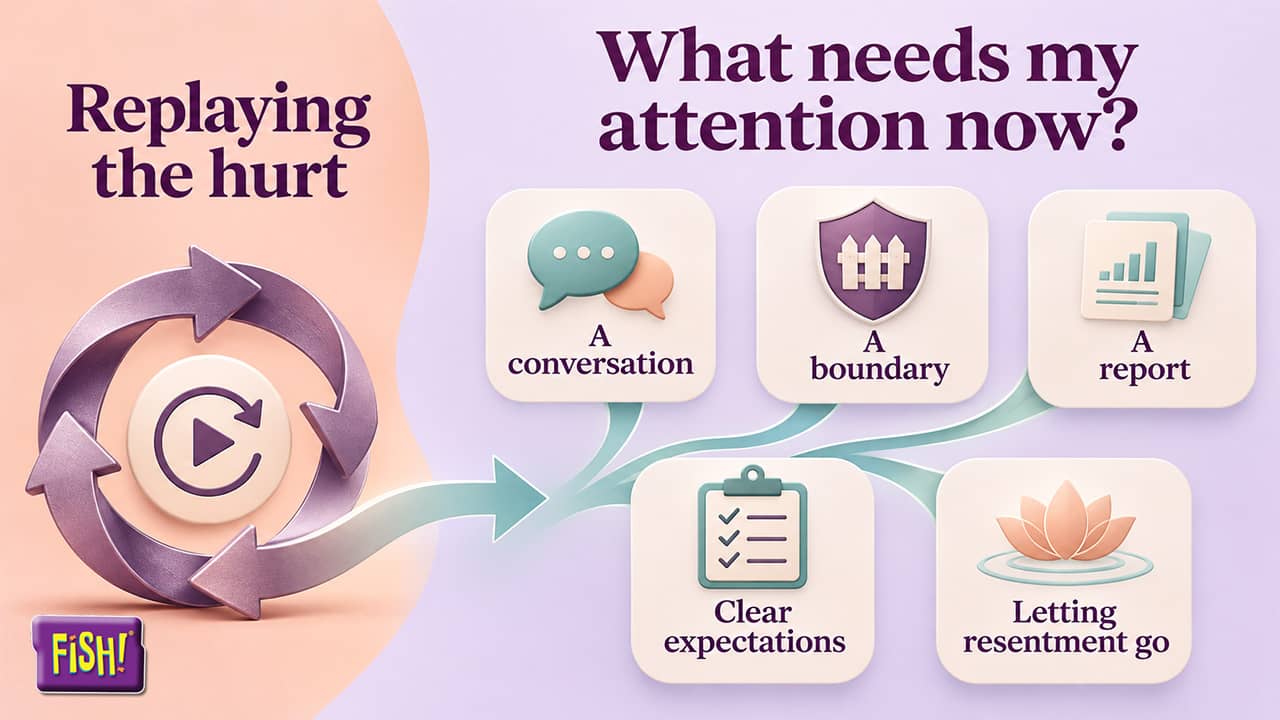
Forgiveness starts when you stop replaying the moment and ask what the situation needs from you now, which may be a conversation, a boundary, a report, or letting go.
Why does forgiveness matter at work?
Holding a workplace grudge takes energy. Your mind may return to the same meeting, email, or comment while you prepare for the next one. General research on rumination, chronic anger, and unforgiving responses links them with greater stress and poorer emotional well-being. Forgiveness-oriented practices may help some people feel less burdened; health concerns still deserve professional care.
The effects reach beyond one person. When an employee tells several colleagues about a hurtful exchange and begins recruiting allies, the office can form sides around an event that most people did not witness. People then spend time protecting their group and reading ordinary decisions as proof of loyalty. One sincere step toward forgiveness can interrupt that pattern and give others permission to stop carrying an old conflict.
Forgiveness helps trust grow in a realistic way. It grows when people acknowledge harm, change behavior, keep agreements, and see that mistakes can be repaired. Some of the strongest work relationships grow out of conflict because the people involved learn more about one another and build a better way to work together.
How do you forgive a coworker who hurt you?
Start with the part of the situation you can influence: your next response. These steps can help you forgive a coworker, direct report, or manager without rushing your emotions or ignoring a real problem.
1. Be present with what happened and what you feel
Give yourself a quiet moment to name the injury. Were you embarrassed in front of the team? Left out of a decision? Blamed for someone else’s mistake? Disappointed by a manager you trusted? Specific language helps you separate the event from the story your anger has built around it.
The FISH! practice Be There calls for physical, mental, and emotional presence. Bring that same presence to yourself. Notice the tightness, anger, sadness, or fear without judging it. Then ask, “Is holding on to this helping me solve anything?” If the answer is no, ask what would help now: more information, a direct request, support from HR, time away from the conversation, or a decision to release the grievance.
You may need to speak with the other person. Choose a calm time and describe the behavior and its effect in clear terms. Listen for their view without preparing your rebuttal while they speak. Being present helps you understand the whole situation before choosing your next step.
2. Decide what safety and accountability require
Everyday offenses often include a sharp email, a forgotten invitation, an interruption, a careless comment, or credit that was missed. A direct conversation and a changed pattern may be enough to repair them. Serious misconduct needs a different response. Follow workplace procedures, save relevant messages, and involve a trusted leader or formal reporting channel when appropriate.
Repeated behavior deserves attention as well. Forgiveness becomes unhealthy when it is used to silence a concern or pressure someone to tolerate harm. You can release personal revenge while keeping a boundary, limiting contact, requesting a different reporting relationship, or seeking protection from the organization.
3. See the whole person without rewriting the offense
One harmful action matters, yet it may not tell you everything about a person. Think about the coworker’s usual conduct, pressures they may have been facing, and any evidence that they can learn. This wider view creates room for a second chance when a second chance is safe and earned.
This is where Make Their Day can guide you. The practice asks you to notice that people want to feel valued and seen. You can recognize the good in someone without calling the hurtful action good. That shift can keep one offense from becoming the only lens through which you see them.
It can also protect the team. Before sharing the story with another colleague, ask whether you are seeking help or gathering allies. A trusted adviser can help you think clearly. Repeating the story to build a side usually keeps the conflict alive.
4. Choose a small action that creates a better next moment
Forgiveness becomes easier to practice when it has a useful expression. You might answer a routine request with courtesy, share information your coworker needs, offer help on a task, thank them for something specific, or invite them into a practical conversation. These actions point toward the kind of workplace relationship you are willing to help create.
Play, in the FISH! Philosophy, brings curiosity and creativity to work. Ask yourself, “What is one safe, honest action that could improve the next interaction?” Perhaps you change the handoff process that caused confusion or suggest a short check-in before a deadline.
5. Keep choosing who you want to be
Someone else’s behavior can affect your mood while you remain able to choose your character. Choose Your Attitude means noticing what you are bringing into the next meeting and deciding how you want to act there. You may choose steadiness, fairness, courage, patience, or clarity.
That choice may need to be made more than once. Anger can return when you see the person’s name in your inbox. When it does, acknowledge the feeling and bring your attention back to the future you want to help build. Forgiveness is a direction you keep choosing, even when you still remember being hurt.
Does forgiving someone mean forgetting what they did?
No. Remembering can help you set wise boundaries and recognize patterns. Forgiveness changes the role the memory plays in your life: it becomes information you can learn from, while the scene loses its power to pull you back into it every day.
You can write down what happened, what you needed, what you learned, and what you will do differently. If the person repeats the behavior, update your response. Letting go of resentment at work can help you stay clear and safe while you remain alert.
How can you ask for forgiveness at work?
If you caused harm, begin with a direct apology. Name what you did, acknowledge the impact, and avoid adding excuses. “I interrupted you in the meeting, and it made it harder for you to finish your point. I’m sorry. Next time I’ll make a note and wait until you’re done” gives the other person something real to respond to.
Then ask what repair would be useful. They may need corrected information, a private clarification, a changed process, or time before they are ready to talk. Follow through on the action you offered, and accept that the other person controls whether and when they forgive you.
An apology at work becomes credible through repeated behavior. If you made a mistake, share what you learned with the people affected and explain how you will reduce the chance of repeating it. Play supports this kind of learning because it gives teams room to test, adjust, and improve. Forgiveness supports learning when it is paired with responsibility.
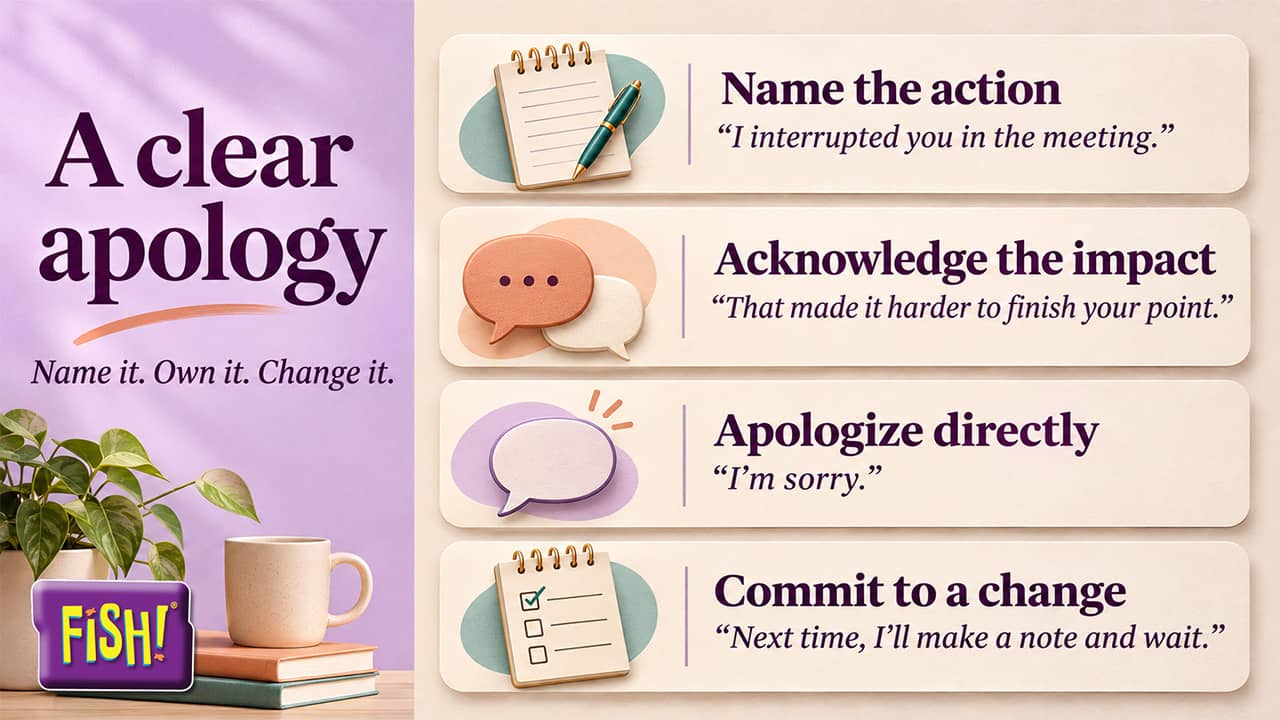
An apology at work becomes believable when it names what happened, admits its effect, and promises a specific change the other person can watch for.
How can leaders build a forgiving team culture?
Leaders shape the emotional conditions around mistakes and conflict. Employees watch what happens when someone admits an error, raises a concern, or asks for a second chance. A leader who wants a forgiving team can take several practical actions.
First, model accountability. Admit your own mistakes without turning the moment into a speech about yourself. Say what you learned, repair what you can, and invite the team to learn with you. This shows that forgiveness is connected to responsibility.
Second, practice Be There. Give employees your full attention when they bring a concern, and schedule a real conversation when you cannot be present. Listen for facts, feelings, and patterns. People address conflict earlier when they believe they will be heard.
Third, make people’s day through specific recognition. Thank employees for the behavior and impact you observed, and recognize contributions across shifts and roles. Genuine appreciation helps people remember that a coworker is a whole person with a life beyond the mistake or disagreement that happened last week.
Fourth, create a safe playing field. Clarify which behaviors are out of bounds, such as harassment, retaliation, humiliation, and exclusion. Within those boundaries, give people room to try a new approach and learn from an unsuccessful attempt. Respond to an admitted mistake with curiosity: “What happened, and what can we learn?” Then separate a thoughtful error from careless or repeated conduct that needs correction.
Finally, keep the conversation going. A forgiving culture is built through regular check-ins, fair processes, clear follow-through, and leaders who choose their attitude in difficult moments. The team learns from leaders’ consistent actions, so what they do matters more than any poster.
A practical way to move from conflict
Forgiveness in the workplace starts with one honest question: “What can I release, and what still needs my action?” Be present with the answer. See the person beyond the offense. Choose a constructive next step, and keep choosing the attitude that lets you work with integrity.
Try this with your team at the next meeting: invite everyone to name one behavior that helps people recover after a mistake and one behavior that makes recovery harder. Agree on one small practice to try for the next week. A team that can learn, repair, and move forward has more energy for the work that matters.
Try the FISH! Philosophy with your team
If your team wants a shared language for forgiveness, accountability, and better daily interactions, try the FISH! Philosophy upgraded trial. Your team gets 30 days of access to the FISH! film and its digital guides, giving you practical material to start putting Choose Your Attitude, Be There, Make Their Day, and Play into practice together.

Frequently Asked Questions
How long does it take to forgive a coworker?
There is no standard timeline. A small slight may fade after a good conversation, while betrayal, repeated harm, or a formal workplace complaint may take much longer. Give yourself time and consider support from a counselor, mentor, HR professional, or another trusted resource.
Should I tell my coworker that I forgive them?
You can, if the conversation feels safe and the words would be helpful rather than confusing. Sometimes a simple change in how you work together communicates the decision more clearly, especially when the other person has not acknowledged the harm.
What if my coworker refuses to apologize?
You can still decide how much attention and anger you want to give the situation. Set a clear boundary, document repeated behavior, and use the right workplace process when the issue affects safety, fairness, or your ability to do your job.
Can forgiveness improve remote-team relationships?
Yes. Remote teams can carry conflict through short messages, delayed replies, and assumptions about tone. A focused video or phone conversation, a generous reading of ordinary mistakes, and a clear agreement about communication can help people repair the relationship before resentment grows.
How do I support a colleague who is struggling to forgive?
Listen without pushing them to “get over it.” Ask what happened, what they need to feel safe, and whether they want help thinking through a next step. Support their choices while encouraging formal help when the situation involves serious misconduct or ongoing harm.