
Person centered care begins with a simple question: what does this person need in order to feel known, safe, and respected? The answer comes from the person’s values, preferences, relationships, and life story, not only from a diagnosis or a task list.
The story that follows offers a lasting lesson for nurses and every other member of a care team. Read it as a reminder that a single human moment can shape how a family understands an entire community.
This Is Where Our Mother Can Live
Mary Henderson of Providence Everett Health System tells this story to help nurses see new possibilities in their work through The FISH! Philosophy:
My mother lived to be 100 years old. When she was 92, she still lived in my house. One day, she fell on the stairs and was severely injured. My mother and I realized that she was too frail to live in my house any longer. After she had recovered from her injuries, my mother, my brother and I set out one morning, intent on visiting all the nursing homes and assisted living facilities in our area. Our hope was to find a place for our mother to live in comfort and dignity.
Our search began on a depressing note that only got worse as the day went on. The facilities we visited seemed so impersonal that every time we would leave one of them, I would say to my brother: “There’s no way our mother is going to live in a place like this.” By late afternoon we were feeling downhearted and exhausted. We almost gave up, but we were committed to visiting every place on our list.
It was so late when we walked into the last nursing home that employees were clearing away the dinner dishes. We stood in the doorway for a moment when one of the food service workers noticed us. She came over and welcomed us with a big smile. When we told her why we were visiting, she took us on a thorough tour of the facility. She even took us into an unoccupied resident room so my mother could get a feel for what the rooms were like.
Then this woman did the most extraordinary thing: She sat on the edge of the bed and told us how and why she came to work at this nursing home. She told us about the great relationships she had developed with the residents and her colleagues. Her stories painted a picture of a warm and caring community. She answered all our questions, putting us at ease, especially my mother.
She walked us to the front door and said good bye. As we walked to our car, I turned to my brother and said: “This is where our mother can live.”
It wasn’t a marketing or sales person, an administrator or a manager, who helped this family. It was a food service employee who saw the family not as three people interrupting her work, but rather as two loving children who wanted the best for their mother. She stepped outside her job description to Be There and Make Their Day.
How will you step outside of your job description for someone who needs you?
What does this story show about person centered care?
Mary Henderson’s account shows how care is experienced through small choices. The food service employee paid attention, made space for questions, and treated the family as people with hopes and concerns. Her role may have involved meals, yet her welcome helped the family picture a caring home. That is person centered care in action: seeing the whole person and responding to what matters to them in that moment.
The moment also brings the FISH! Philosophy into focus. The employee practiced Be There by noticing the family in the doorway, giving them a thorough tour, sitting on the edge of the bed to share her own story, answering their questions, and walking them to the door. She practiced Make Their Day by helping the family feel welcomed, informed, and more at ease during a difficult search. Those actions show how presence and a thoughtful personal connection can shape the experience of care.
A team can apply the same idea this week. During one interaction each shift, pause long enough to notice what the person may be feeling. Listen before preparing your answer. Offer one useful next step, and follow through. At the end of the shift, share a specific example of someone who helped a resident, patient, family member, or coworker feel seen. Repeated attention turns a good moment into a shared way of working.
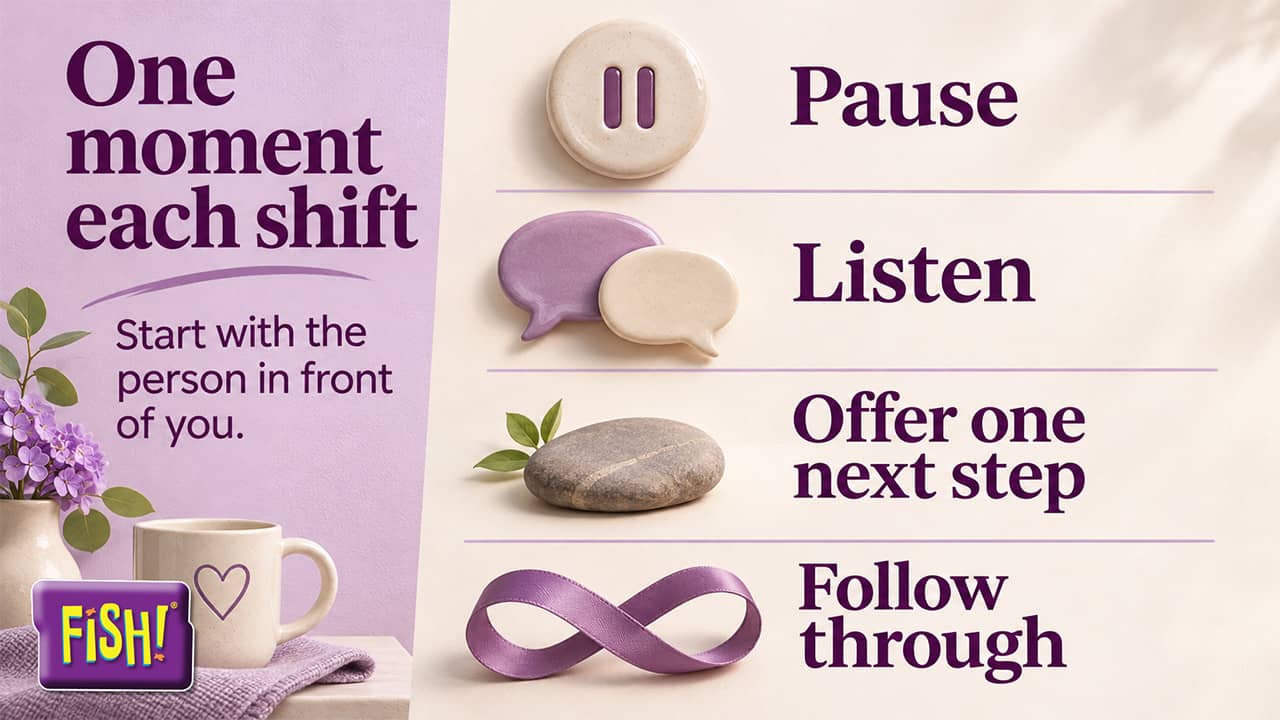
A single interaction each shift is enough to start, as long as the person giving it pauses, listens before answering, offers a useful next step, and comes back to finish what they promised.
What is person centered care?
Person centered care is care built around an individual’s values, preferences, goals, identity, and life story. It includes clinical needs, but it also asks how the person wants to live, communicate, make choices, and stay connected to the people and routines that give life meaning.
The approach applies in hospitals, nursing homes, assisted living, senior living, home care, and other settings. A resident may want breakfast at a familiar time. A patient may need information explained in a way their family can understand. Someone receiving long-term care may care deeply about music, faith, privacy, clothing, food, or a daily phone call. These details belong in the picture of good care because quality of life is part of health and well-being.
You may also see the phrase patient centered care or resident centered care. The setting and language can change, while the central commitment stays steady: involve the person, respect their choices, and coordinate care around what matters to them.
What are the principles of person centered care?
The main person-centred care principles work together in daily conversations and decisions:
- Dignity and respect: Speak to the person directly, protect privacy, honor identity, and treat preferences as meaningful.
- Information and communication: Share clear, timely information and check that the person and family understand it. Listening is part of communication.
- Participation in decisions: Invite the person and, with their permission, their family or chosen supporters into care planning and choices.
- Coordination and continuity: Help information move across shifts, departments, services, and settings so the person does not have to carry the whole plan alone.
- Emotional support: Notice fear, grief, confusion, loneliness, or frustration and respond with patience, kindness, and appropriate help.
These principles are consistent with the broad way health organizations describe person centered care. They also give teams a practical test: after an interaction, does the person have more understanding, voice, connection, and confidence in what happens next?
Why does person centered care matter to residents, patients, and families?
People receiving care often give up control over parts of ordinary life. They may depend on others for movement, meals, medication, bathing, information, or decisions. Respectful care helps restore a sense of agency by making room for choice wherever choice is possible.
That matters for families too. Relatives and friends may feel worried, guilty, or unsure of their role. When staff explain what is happening, welcome questions, and remember the person’s preferences, families can become informed partners rather than anxious visitors. Trust grows through consistent actions, especially when care is complicated or plans change.
Person centered care can also support better communication and safer coordination. People are more able to share concerns when they feel listened to, and staff are more likely to notice changes when they know the person behind the chart. Research across health and social care generally links person centered approaches with stronger care experiences and greater involvement in decisions. The practical work remains essential: know the person, listen carefully, and connect the next action to what matters.
What does person centered care look like in a nursing home?
In a nursing home, person centered care is visible in ordinary routines. Staff learn how a resident likes to be addressed, what helps them feel calm, what foods they enjoy, and which activities have meaning. Care plans include personal goals and preferences, and staff use them during real interactions rather than treating them as paperwork stored away.
A resident may choose between two outfits, decide where to sit, or ask for a different bathing time. A nurse explains a medication change in plain language. A dining worker notices that a favorite food has become difficult to eat and alerts the right colleague. A housekeeper protects privacy and treats a resident’s room as a home. A front desk worker helps a family member find the right person. Maintenance staff keep the environment safe while respecting routines and belongings.
In a hospital, a patient may need a quiet explanation before a procedure, a communication aid, or a family member included in a conversation. Each action supports dignity and voice.
How can every member of a care team practice person centered care?
Every role shapes the experience because every role has contact with people, information, spaces, or routines. Use these practices across the team:
- Learn one human detail. Ask what helps the person feel comfortable, what name they prefer, or what they would like others to know. Record and share relevant information through the right process.
- Be There for one complete conversation. Put down the competing task when possible, keep your attention on the speaker, and let them finish. If the timing is wrong, name a time when you can give full attention and keep that promise.
- Make Their Day in a way that fits the person. A warm greeting, a favorite song, a clear update, or a quiet thank-you can matter. Make the gesture sincere and suited to the person’s comfort, rather than turning kindness into a performance.
- Choose Your Attitude before a difficult interaction. Notice what you are carrying from the last task, then decide how you want to show up for the next person. This is not a demand to hide stress; it is a chance to approach the person with care and ask for support when you need it.
- Use Play as thoughtful creativity. Look for a better way to solve an unusual problem, while staying within safety, consent, privacy, and professional boundaries. Curiosity can help a team adapt without making the person feel like a problem.
- Close the loop. Tell the next colleague what the person asked for, what has been done, and what still needs attention. Coordination is one of the clearest forms of respect.
Leaders can strengthen these habits by asking about them in huddles, inviting stories from every department, and recognizing specific actions. They can also make the playing field clear: explain which decisions workers can make on the spot, where they need approval, and how to raise a concern. Staff need room to respond with judgment, plus support when a thoughtful attempt needs adjustment.
What are six person centered care examples?
Here are practical person centered care examples that can happen without a new program or expensive tool:
- A nurse learns that a patient understands best when information is written down, then uses plain language and checks understanding before the patient decides.
- A dining team remembers a resident’s cultural food preference and works with clinical staff when the person’s diet changes.
- A housekeeper asks permission before moving personal items and returns them to the same place, protecting both privacy and familiarity.
- A front desk worker notices that a family member looks lost, listens to the concern, and connects them with the right care team member instead of giving a quick direction.
- A maintenance worker explains a noisy repair, offers a quieter time when possible, and reports which residents may need extra support during the work.
- A supervisor thanks an employee for noticing a resident’s worry and following through, naming the action and the difference it made.
Each example is small, yet each one says that the person’s comfort, voice, and life matter. That message is the foundation of compassionate care.
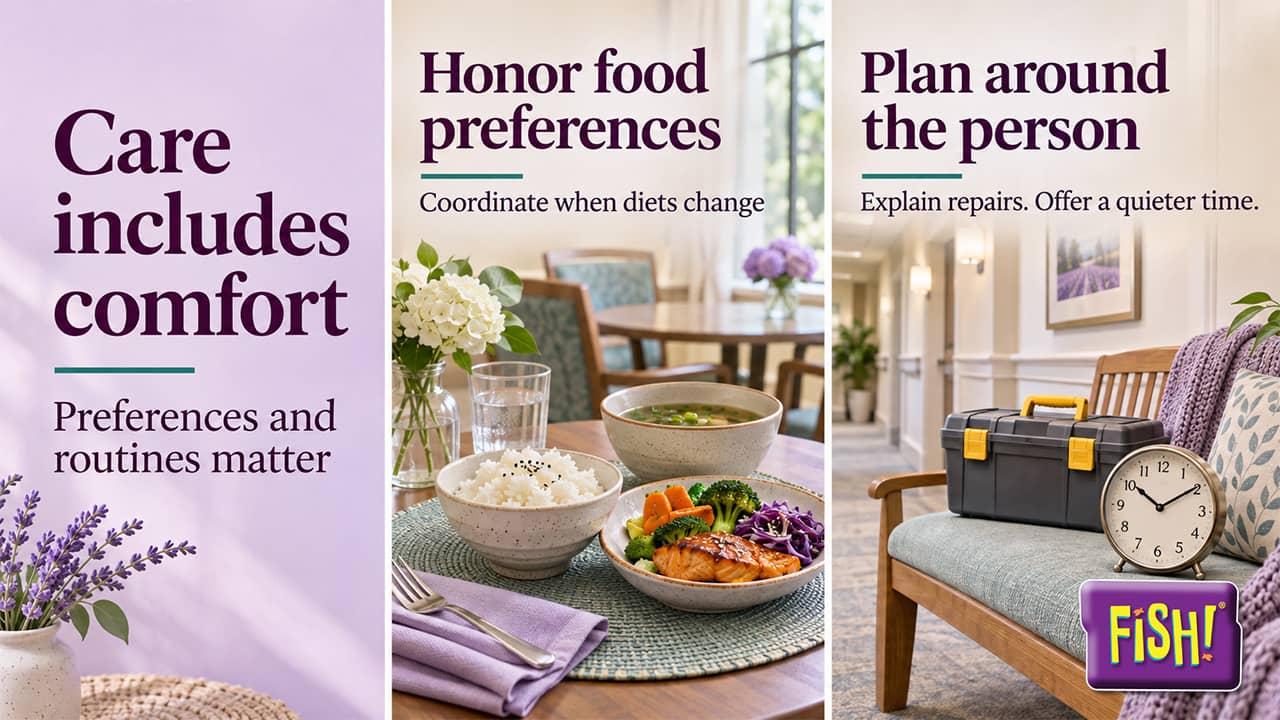
Person centered care reaches well beyond the clinical team, because the dining staff who coordinate a diet change and the maintenance worker who times a noisy repair around a resident both shape how comfortable that person feels.
How can leaders build a person centered culture?
Culture grows through what leaders notice, ask about, reward, and make easier. Start by asking residents, patients, families, and staff where the experience feels personal and where it feels rushed. Look at handoffs, care meetings, welcome routines, dining, housekeeping, and transport, because the gaps often sit between departments.
Invite teams to define the behaviors that show dignity, listening, coordination, and emotional support. Then give people time to practice those behaviors through short discussions and real examples. A leader might ask, “Who needed us to Be There today?” or “What helped someone feel that their choice mattered?” These questions connect person centered care to the FISH! Philosophy without turning the practices into a checklist.
Recognition should be specific and genuine. Thank the employee who noticed a preference, included a family member, or helped another department follow through. When leaders Choose Your Attitude and stay present during hard conversations, they model the culture they hope to see. When they make room for useful ideas and safe experimentation, teams can use Play to improve the experience while keeping clear boundaries.
A simple person centered care practice for this week
At the next team huddle, invite each person to name one moment when a resident, patient, family member, or coworker needed full attention. Ask what the person seemed to value, what the team did, and what could make the next interaction more personal. Choose one small action to try before the next huddle, then return to the conversation and learn from what happened.
Start with the person in front of you
Person centered care becomes real when a team sees more than a task, room, diagnosis, or schedule. It grows through attention, clear communication, shared decisions, and small acts that protect dignity. The FISH! practices offer a useful language for that work: Choose Your Attitude, Be There, Make Their Day, and use Play to bring curiosity and creativity to the job. This week, notice one person who needs a little more care in the moment, and choose a response that helps them feel known.
Try the FISH! Philosophy with your team
Invite your team to try the FISH! Philosophy upgraded trial, which gives you 30 days of access to the FISH! film and its digital guides. Use the film and guides to start conversations about being present, making people’s days, choosing how you show up, and bringing thoughtful energy to person centered care.

Frequently Asked Questions
How can families support person centered care?
Families can share the person’s routines, preferences, communication needs, goals, and important relationships, then ask how that information is being used in the care plan. They can also speak up when something has changed and join decisions in the way the person wants.
How do you measure person centered care?
Teams can combine feedback from residents, patients, and families with observations, care-plan reviews, complaint themes, and evidence that preferences are carried through handoffs. Measures are most useful when they lead to a conversation and a practical improvement, rather than becoming a score alone.
How does person centered care support people with dementia?
It starts with knowing the person’s history, communication style, routines, comforts, and signs of distress. Consistent relationships, familiar choices, respectful explanations, and attention to nonverbal communication can help the person feel secure and involved.
What should a care team do when a person’s choice creates a safety concern?
Listen to the person’s goal, explain the concern clearly, and look for the least restrictive option that protects safety while preserving choice. The right response usually involves shared planning with the person, authorized supporters, and the relevant professionals.
How can a small care team begin?
Choose one daily interaction to improve, such as the welcome, a meal, a handoff, or a family update. Discuss what happened, recognize useful efforts, and build from one repeatable habit rather than waiting for a large culture project.